Product Overview
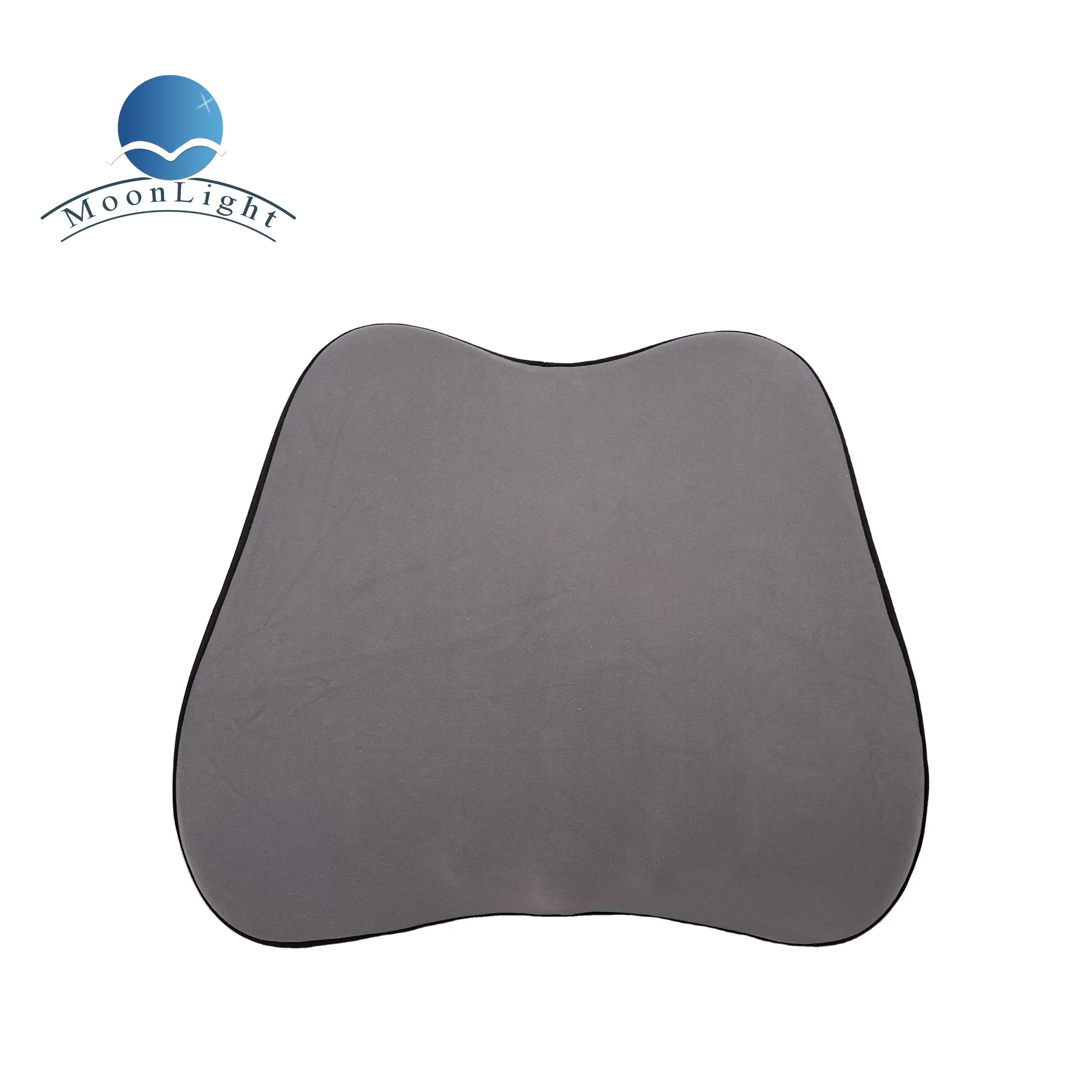
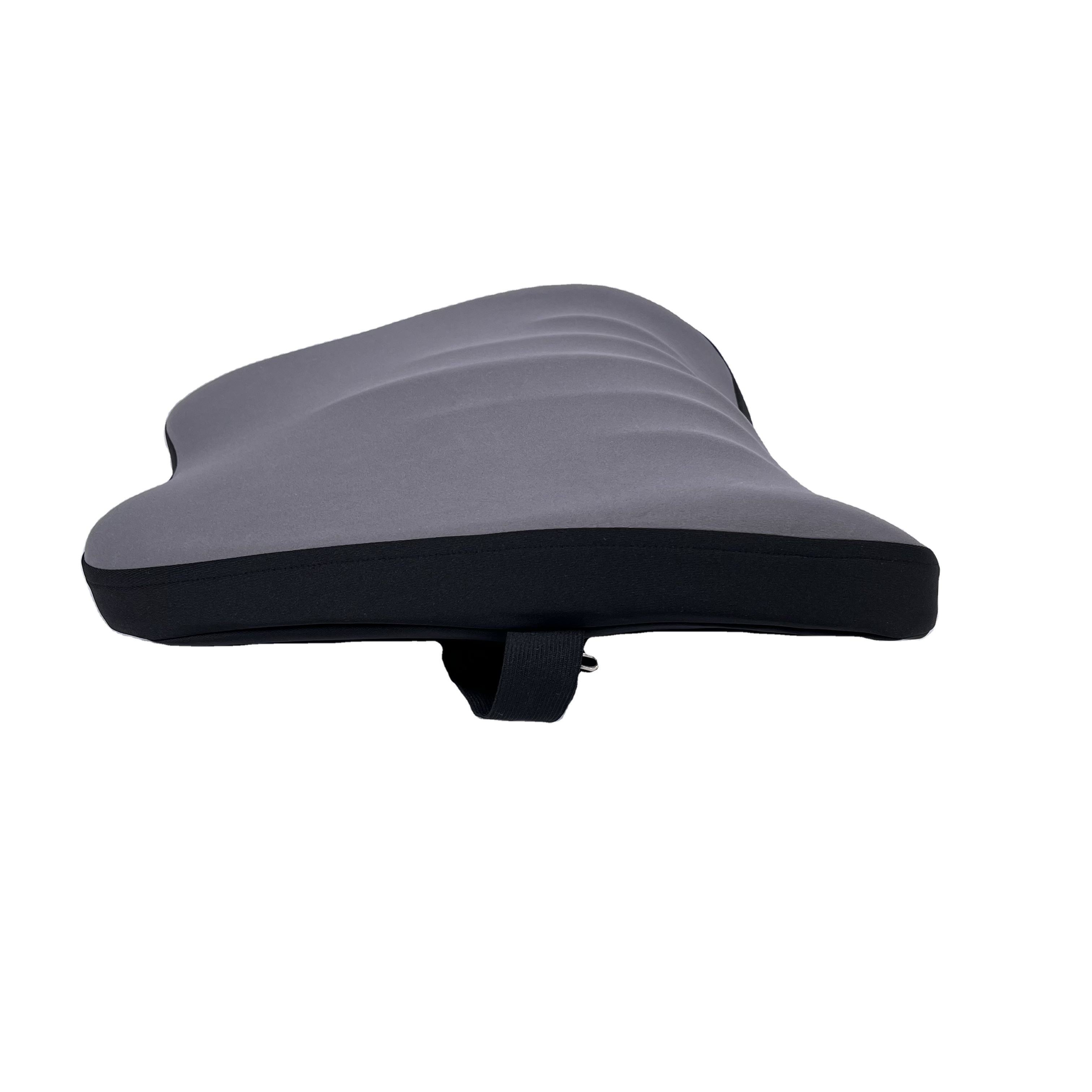
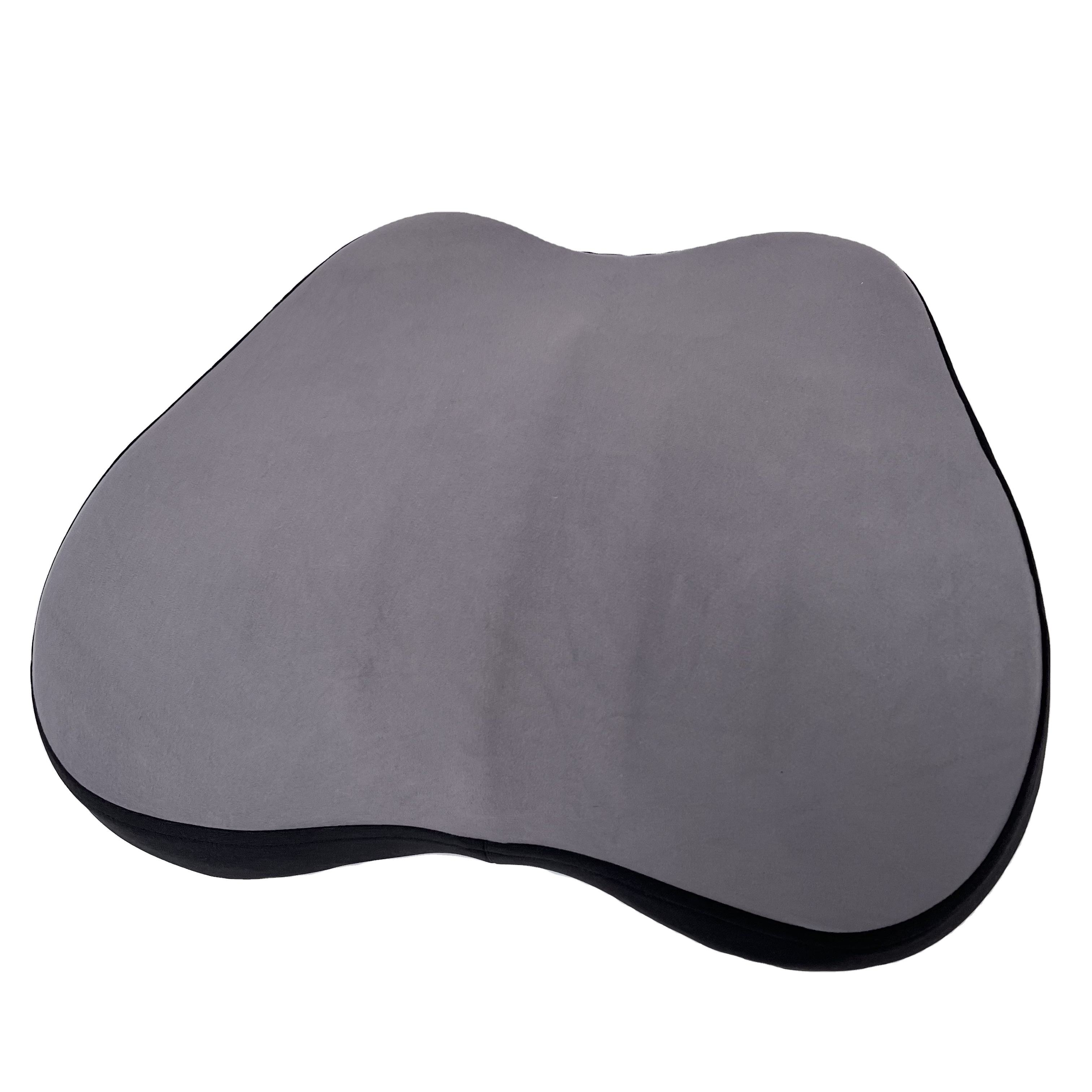
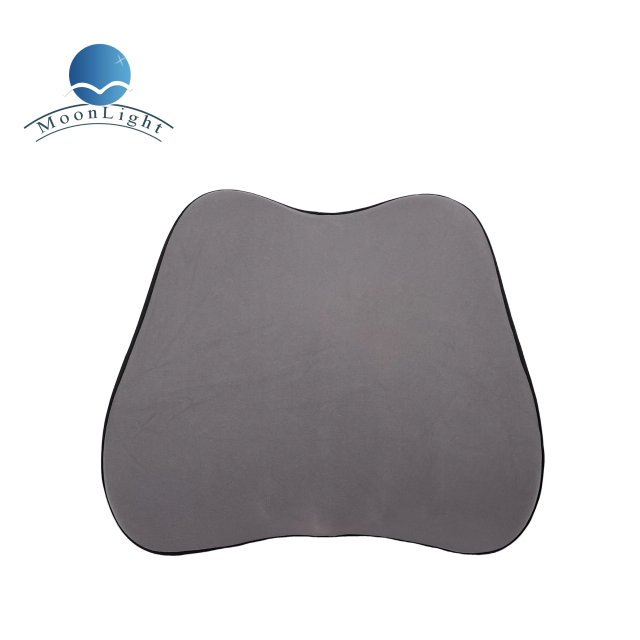
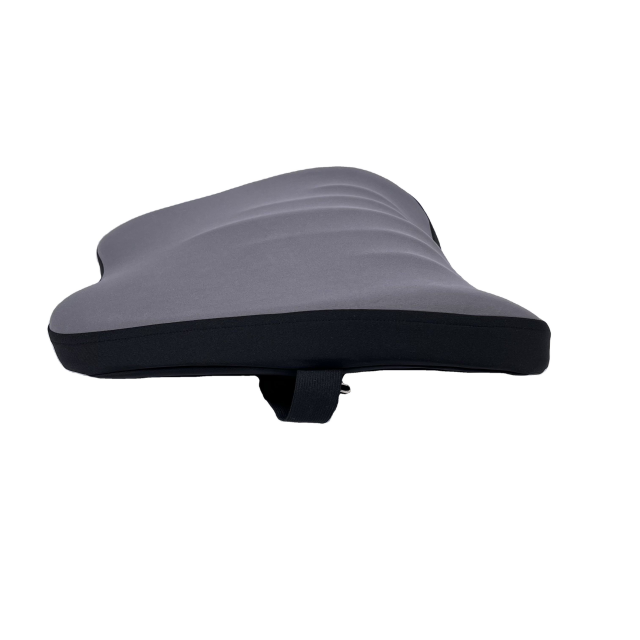
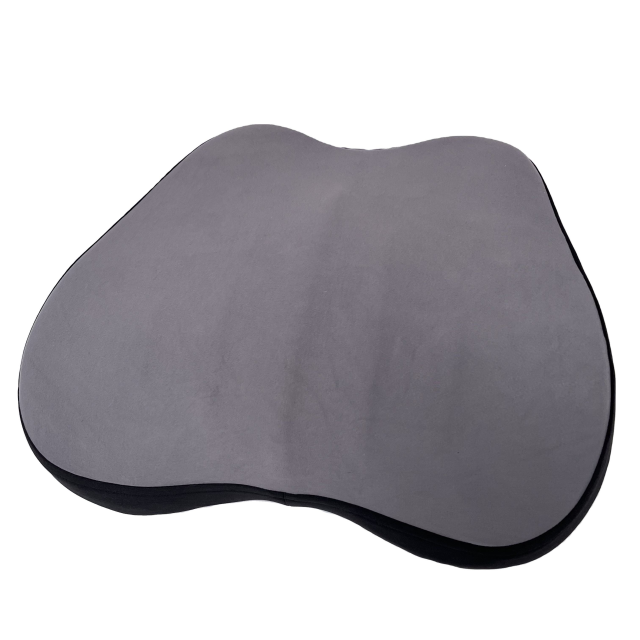
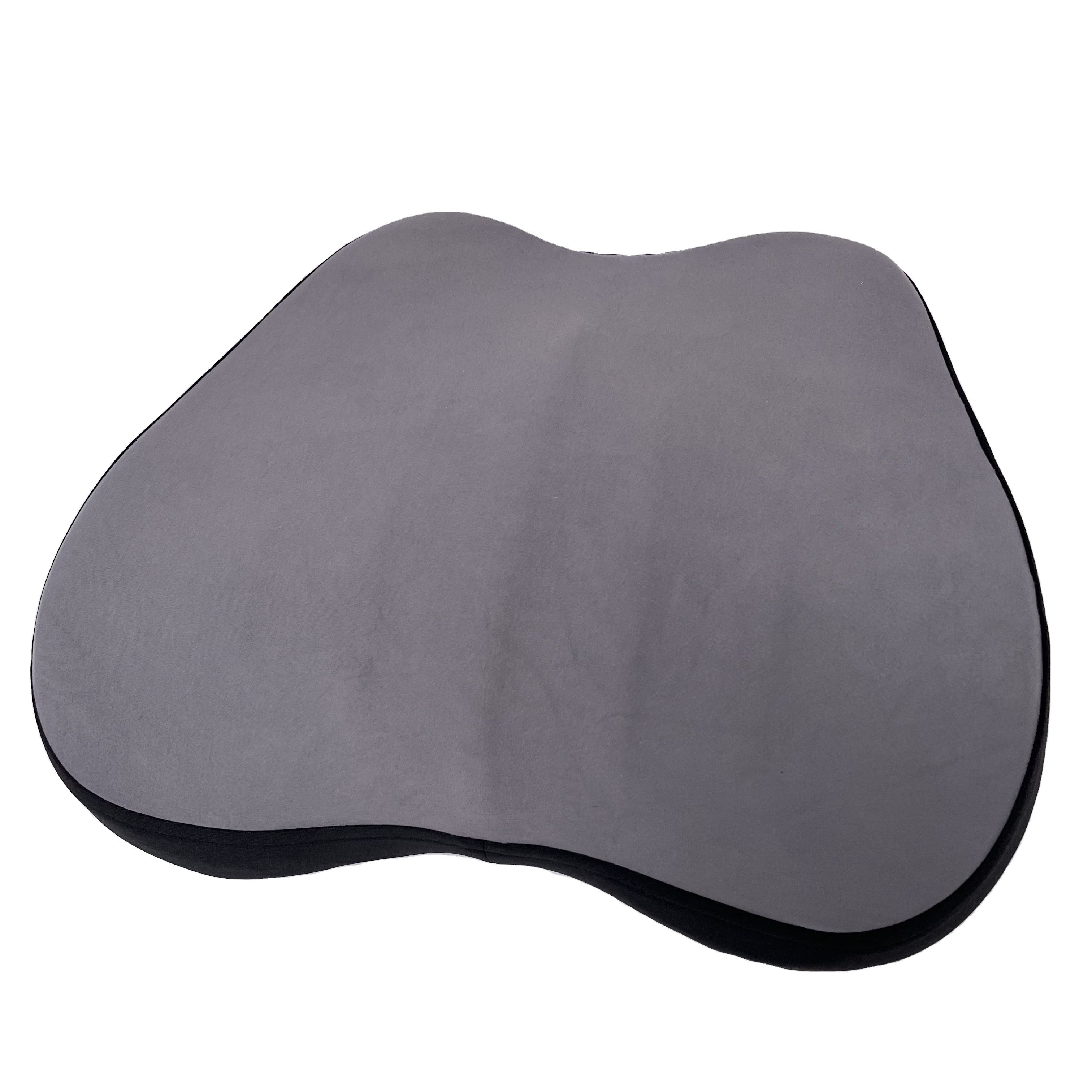
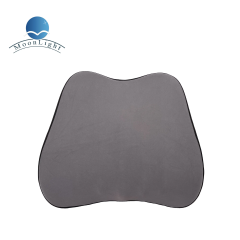
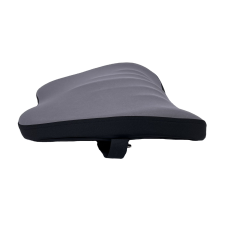
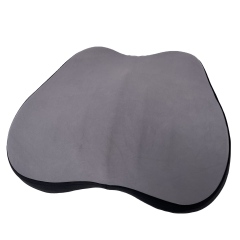
The Moonlight Ergonomics cushion (No. MLMC006) is made for sitting that lasts all day — a desk chair through a full shift, a driver's seat on a long run, the reading chair at the end of the evening. It is one piece rather than a set of pads, and it works as an ergonomic seat lumbar cushion set — memory foam back support for car and office chair seating, with the seat section contoured and the lumbar section shaped to sit in the hollow between the lower back and the chair back. The face is a smooth nylon/spandex knit with a zipped, removable cover, finished with dark piping along the edge and a plain base panel underneath. It is an adult cushion, and the cover, colour, logo, fabric and filling density can all be changed for a programme. The wider range also covers pregnancy pillows, memory foam pillows and dog beds, so a container can be consolidated from one supplier.
Why This Memory Foam Cushion Works
Sitting badly is rarely one sensation. Two show up first: pressure under the tailbone, and a lower back that has to hold itself upright because the chair back leaves a hollow above the seat. The two zones of this cushion answer those separately — the seat section compresses where the weight is heaviest, and the lumbar section sits in that hollow so the lower spine has something to rest against.
Memory foam is what makes the shape hold. It is a slow-rebound foam: it takes the imprint of whoever is sitting, then eases back into its own form when they get up, which is why a memory foam seat cushion feels contoured rather than simply padded. Fibre and cotton fillings behave the other way round — they pack down where the weight sits and need shaking back into shape after every use.
A cushion like this is judged over time on whether the foam still supports in month twelve. That is a question of foam grade — this one is specified to keep its loft through repeated compression, so the unit reaching a customer in month one still behaves like the one in the photographs.
Expect it to feel slightly firmer in the first few days and to soften a little as body heat works into the foam. It is a comfort cushion, not a posture corrective and not a medical device: it does not straighten anyone's spine, it removes the two pressure points that make long sitting tiring.
Nothing in this cushion is medical, and nothing about it should be treatment. The construction is a memory foam seat and lumbar shape inside a zip-off nylon/spandex knit — no device, no mechanism, no clinical testing behind it, and no medical-device registration or certificate that we can hand to a buyer. What it does is physical and easy to demonstrate: it changes how sitting weight is distributed, and it gives the lower back something to rest against. Wording that holds Write about the shape and the material: contoured memory foam with a seat section and a lumbar section that fills the hollow between the lower back and the chair back; a knit cover that lets air move against the back during a long shift. Every one of those sentences can be checked against an approved sample and against the piece you receive from bulk, which is what makes them safe to print on packaging or in a product listing. Wording to leave off Orthopaedic, medical-grade, therapeutic, posture-corrective, and anything that names a condition — sciatica, disc trouble, chronic back pain — are claims we cannot back with paperwork, and a buyer who prints them carries the risk. Certification marks need the same care: any textile or audit mark we hold is issued for a particular fabric and model, so it belongs only on the item it was issued for and never across a whole range. Send your draft packaging copy or listing text to your sales contact before artwork is finalised. We will tell you which sentences the specification supports, which to soften, and which to take out — quicker than finding out after a marketplace or a trade buyer has queried the wording.
Fit & Sizing
- Start with the chair rather than the body: measure the seat width at its narrowest point, and the seat depth from the face of the backrest to the front edge.
- Decide where the lumbar zone should land on the user — at the small of the back, above the seat surface — and how much of the seat depth the memory foam seat cushion should cover.
- Mark anything the cushion has to clear: side bolsters on a sports seat, a seat-back pocket, a folding armrest, a recessed belt buckle. An ergonomic seat lumbar cushion set only works if it lies flat against the seat.
- Send the measurements or a simple sketch. Size is customized rather than picked from a list, and the same drawing sets both the foam block and the cover pattern for your wholesale ergonomic chair cushion.
- Trial the proportions on the real chair before the bulk run — two seats that measure the same can sit very differently once someone is in them.
- Rule out the wrong seats early: a very shallow bench leaves no room for a lumbar zone behind the sitter, deep bucket seats can pinch the cushion at the bolsters, and a chair that needs a rigid postural device is not what this cushion is for.
Applications
- Office and sit-stand desks: through a full shift the seat section carries weight off the tailbone, and the lumbar section keeps the lower back supported as the chair height changes through the day. - Cars, vans and fleet vehicles: on long runs and stop-start city work, the lumbar section fills the hollow that most vehicle seat backs leave between the seat and the ribcage. - Home office and reading chairs: where a soft chair needs a firmer surface, this memory foam seat cushion gives it one without changing the furniture. - Gaming and bucket seats: check the side bolsters first — where they are deep, the cushion needs a narrower pattern so it sits flat instead of pinching at the edges. - Shared and institutional seating: reception areas, training rooms, clinics and waiting areas, where a cover that comes off for washing matters more than the fabric's finish.
Specifications
| Item | Back seat cushion |
|---|
| Model | MLMC006 |
| Brand | Moonlight |
| Place of origin | China |
| Size | Customized |
| Cover material | Nylon/spandex |
| Filling | Memory foam |
| Weight | 1.5–2 kg |
| Fastening | Elastic strap with buckle |
| Cover care | Removable and washable, zipped |
| Age group | Adults |
| Customization | Yes — size, shape, colour, logo, cover fabric and filling density |
| Use | Memory foam back support for car and office chair seating, and seat-and-back support for home seating |
Cushion Model Comparison
- Start from the chair, then choose the format: when the seat surface is already comfortable and only the lower back complains, a back-only cushion is the smaller, cheaper answer — the wedge for a desk or driving seat that needs a fixed angle against the lumbar hollow, or a flat striped or velvet back cushion for a soft reading or dining chair that needs a shaped layer. This MLMC006 set is the one to specify when the seat itself needs work too, because it is the only format in the range that delivers memory foam back support for car and office chair seating together with a seat section in one piece.
- Back-only formats fit where the full set will not: deep bucket seats and narrow dining or side chairs can pinch a two-zone cushion at the side bolsters, while a back-only pad sits inside the same space without touching them. Check the chair width before you rule a format in or out.
- Do not stack two formats on one chair: a back-only cushion laid over the seat section of this set lifts the sitter forward and pushes the lumbar zone out of position. One format per chair, chosen by which part of the seat is the actual problem.
- Where heat is the complaint, offer the gel version: the cooling-gel back cushion pairs gel with memory foam at a compact back-rest footprint, so it keeps the same small footprint as the flat formats while giving a hot-climate or summer listing a different story from plain foam.
- Piece weight changes the freight, so quote per format: this model runs 1.5–2 kg a piece, while the back-only formats sit at roughly 0.5–1 kg. Carton cube and cost per unit are not interchangeable, so price each format on its own packing rather than averaging the range.
- Artwork and tooling do not transfer between models: a logo approved on a jersey or velvet face has to be re-checked on this model's nylon/spandex knit before it goes to bulk, and each size drawing sets both the foam block and the cover pattern for that format only.
- Quote the right item the first time: order this set by its model number (MLMC006) plus the size drawing, and name the format — wedge, flat back, cooling gel — for anything else in the range, so the sample room pulls the correct pattern and the price comes back for the correct piece.
Cover & Care
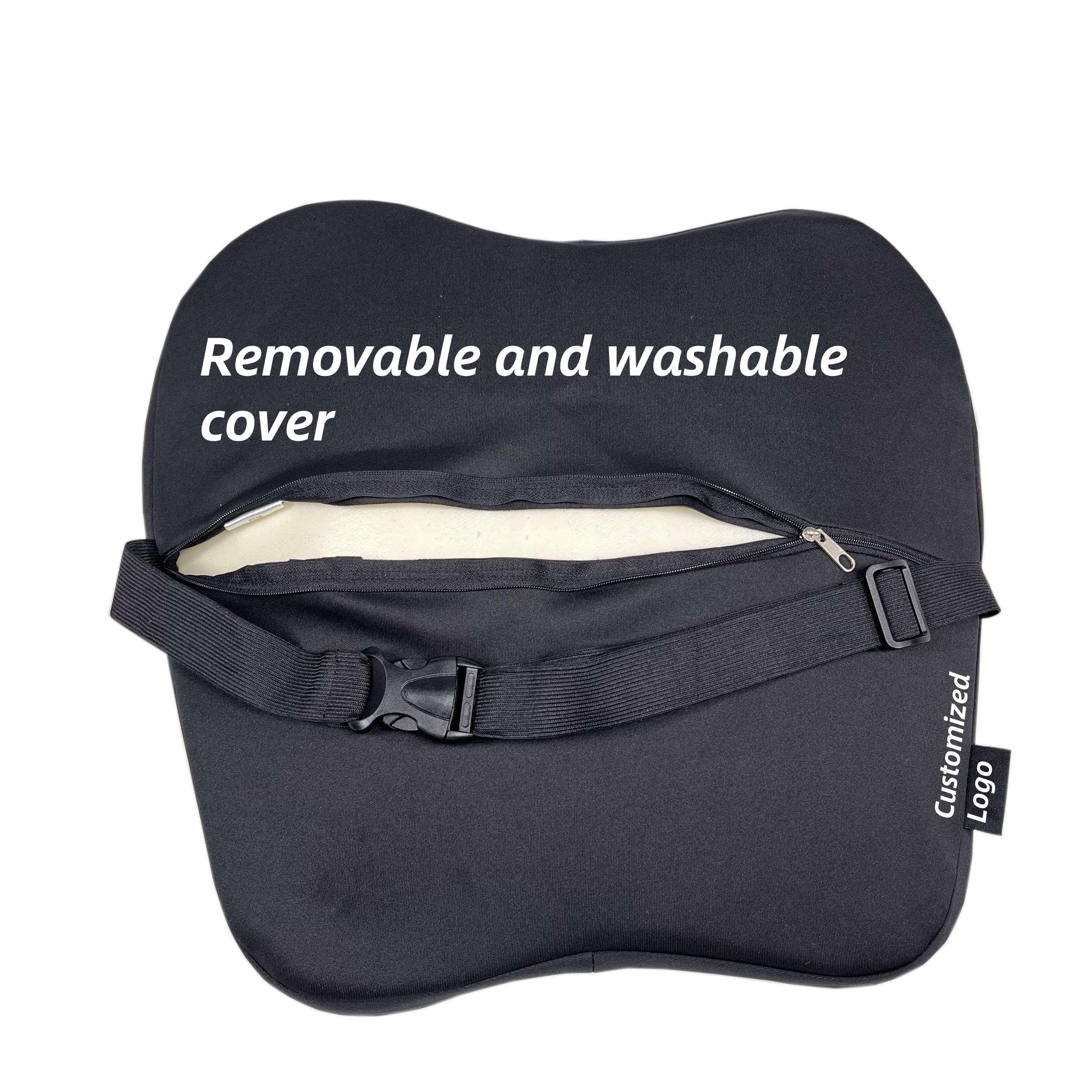
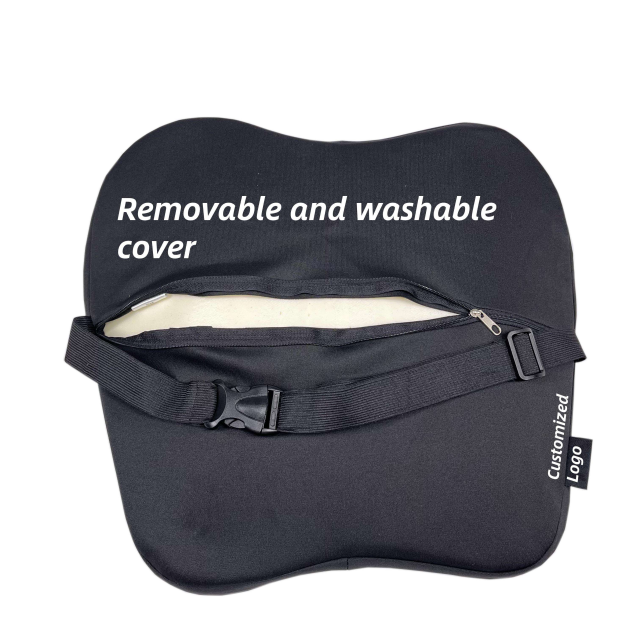
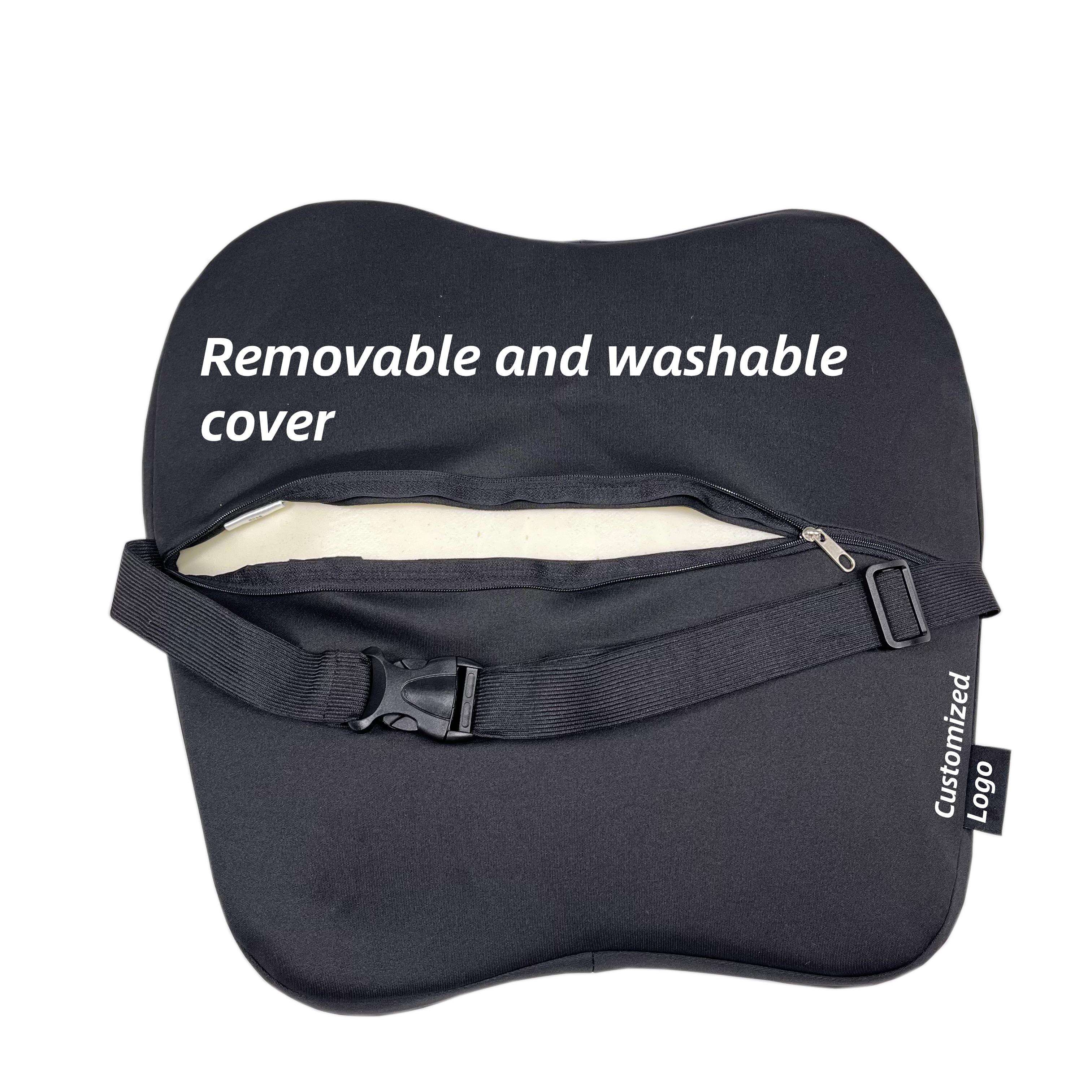
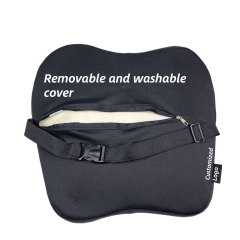
- Unzip and lift the cover off. The zip runs around the base, clear of the seating surface, so nothing rubs against it while the cushion is in use.
- Wash the cover on a gentle machine cycle. Confirm the wash temperature and drying instructions for the fabric you have nominated with your sales contact before you print the care label for your product.
- Keep the memory foam core out of the machine. Spot clean it with a damp cloth and let it air dry completely before the cover goes back on.
- Dry the foam away from direct heat and strong sunlight — it is the one part of the cushion that washing cannot renew.
- Air-dry the cover flat or hang it; a hot dryer is hard on both the knit and the piping.
- Refit once both parts are fully dry, easing the zip closed so the piping sits straight along the edge.
- Wash-cycle life depends on the fabric you nominate. If a listing needs a wash-cycle figure, ask your sales contact for the current figure for your production fabric.
- Between washes, vacuum the cover and wipe the strap. Soaking the core is what shortens a memory foam cushion's life, not ordinary daily use.
Ordering & Delivery
| Payment terms | T/T, L/C, D/P D/A, MoneyGram, Credit Card, PayPal, Western Union, Cash, Escrow |
| Lead time | Stock items: about one week; OEM/ODM available |
| Packing | 1pc/polybag/box,as requested |
| Shipping terms | FOB, CFR, CIF, EXW, FAS, CIP, FCA, CPT, DEQ, DDP, DDU, Express Delivery, DAF, DES |
| Port of loading | Shanghai |
| Quality tracking | Shipment and sample quality tracking provided throughout the product lifetime |
| Response time | All requests responded to within 24 hours |
| Samples | Ask your sales contact about sample availability and current terms for your specification |
| Working languages | English, Chinese, Spanish, Japanese, Portuguese, German, Arabic, French, Russian, Korean, Hindi, Italian |
| Programme support | Wholesale ergonomic chair cushion orders, from stock or made to your specification |
Quality Control & Inspection
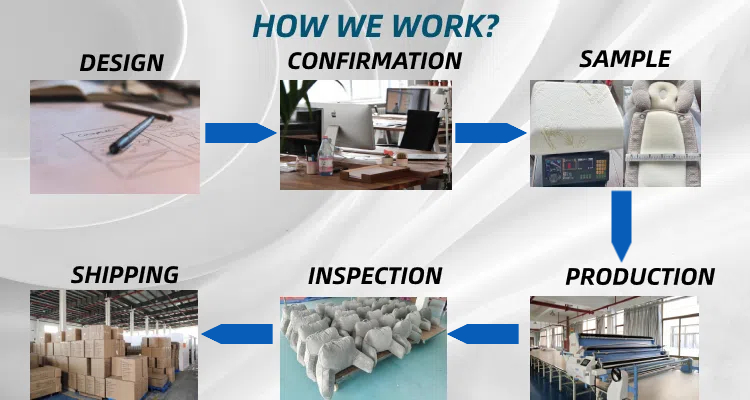
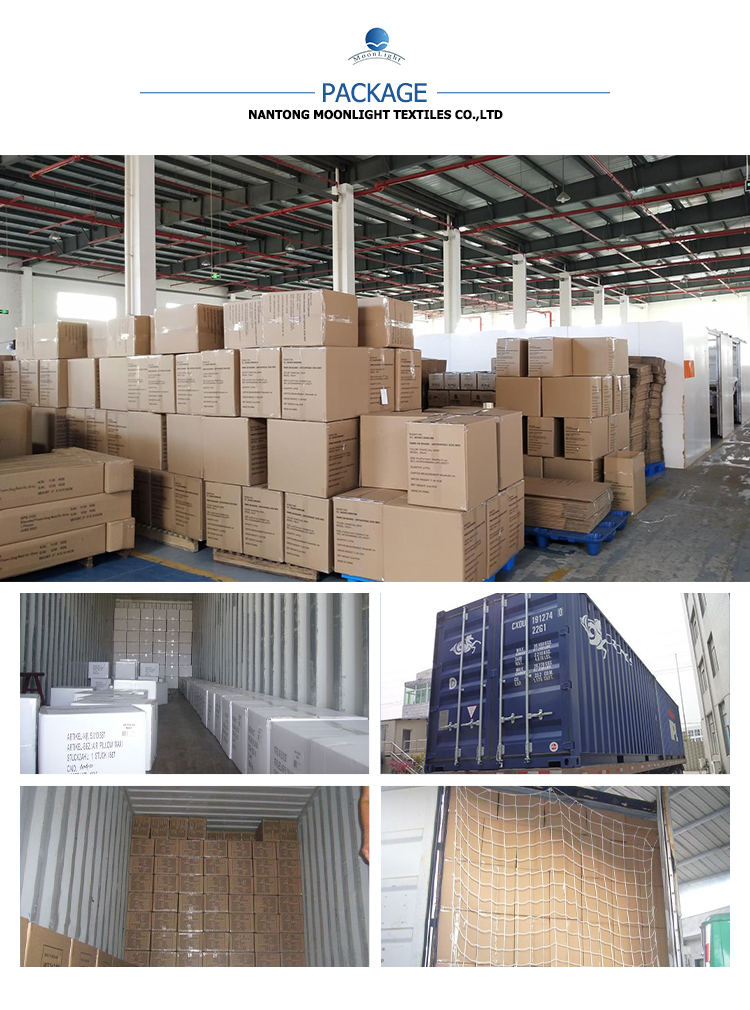
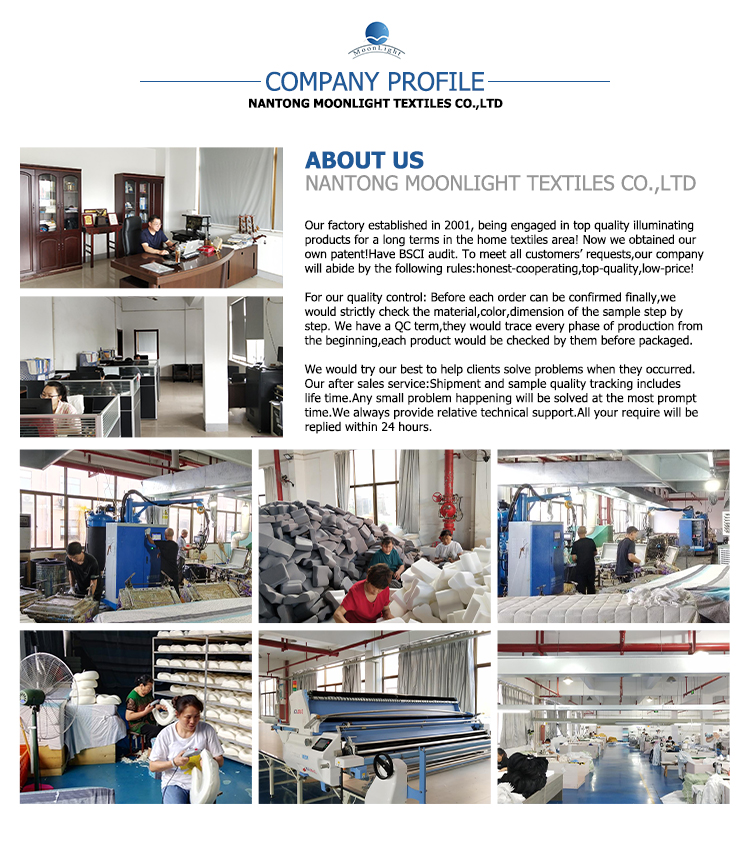
Quality is verified at each stage, not only at the end. Before bulk production we submit a pre-production sample for your approval, checking material, colour and dimensions step by step. Our QC team then follows every batch through production and inspects each piece before packing, with a final inspection before shipment. If your own team or a third-party inspector attends that final check, we plan production around it. Any issue found is raised with you before goods ship, and quality questions are answered within 24 hours. Our factory is BSCI-audited and OEKO-TEX certified.
FAQ
Will it stay in place when I get in and out of the car?
Yes. An elastic strap with a buckle runs under the base and wraps around the seat back, so the cushion is held against the chair rather than balanced on it. The underside is a plain, flat fabric panel that sits flush against leather or cloth upholstery, and at 1.5–2 kg the cushion does not lift when the sitter stands up. On a bench seat without a separate backrest, the strap simply goes around the whole back of the seat.
Is this a medical or orthopaedic product?
No. It is a comfort cushion: memory foam shaped to take pressure off the tailbone and to fill the hollow behind the lower back. It is not a medical device and we do not present it as treating or preventing any condition. If a buyer needs clinical pressure relief, this is not that product — what it does is make long sitting less tiring for healthy adults.
Can our logo go on the cushion?
Logo is one of the elements we produce to your brief, alongside size, shape, colour, cover fabric and filling density. Send the artwork and the placement you want — on the seat face, the lumbar face, or a label at the edge — and we will confirm the method that suits your nominated cover fabric before sampling. Because the cover is cut from your own pattern, the logo position can be set for that pattern instead of being squeezed onto a stock shape.
How is this different from your wedge lumbar cushion?
The wedge is back-only: a fixed angle that holds the lower back forward, for seats that are already comfortable to sit on. This one is an ergonomic seat lumbar cushion set, with the seat section and the lumbar section in one piece, and it is made to your measurement so it can be specced to the chair rather than to a stock size. Choose the wedge when only the lumbar area is a problem; choose this when the seat and the back both need work.
Does the foam get hot on a long drive?
Any memory foam cushion warms with body heat and softens slightly as it does — that is normal and part of how it contours. The cover is a breathable, moisture-wicking nylon/spandex knit that lets air move against the back and helps the surface stay dry in warm weather and on long drives. If you are specifying for a hot-climate market, ask your sales contact which cover options suit that season.
Does the lumbar zone sit in the right place for different body heights?
That is what the custom sizing is for. The lumbar section can be positioned on the pattern to match the small of the back for the people who will actually use the cushion, rather than sitting at one fixed height. For a programme covering a wide range of users, a mid-position measurement works across most of them — check it against the tallest and shortest users before the bulk run.