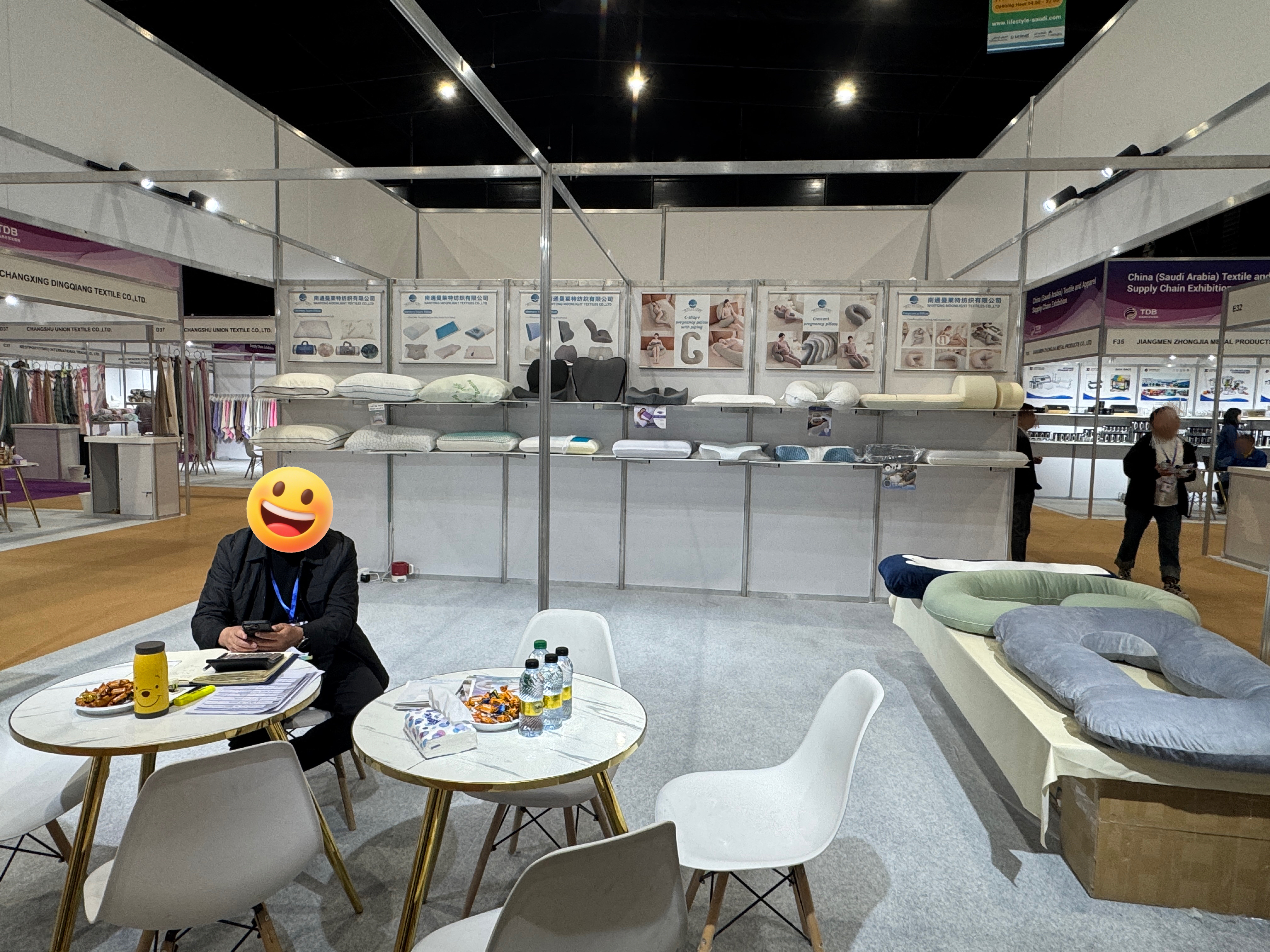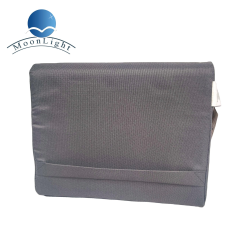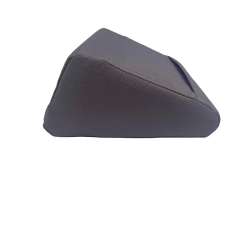
Item: tablet pillow holder
Place of Origin: Jiangsu, China
Feature: Soft
MOQ:500pcs
Material: Sandwich mesh fabric
Filling: Memory foam
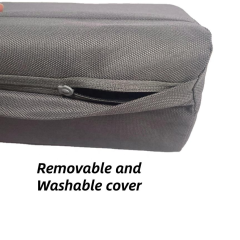
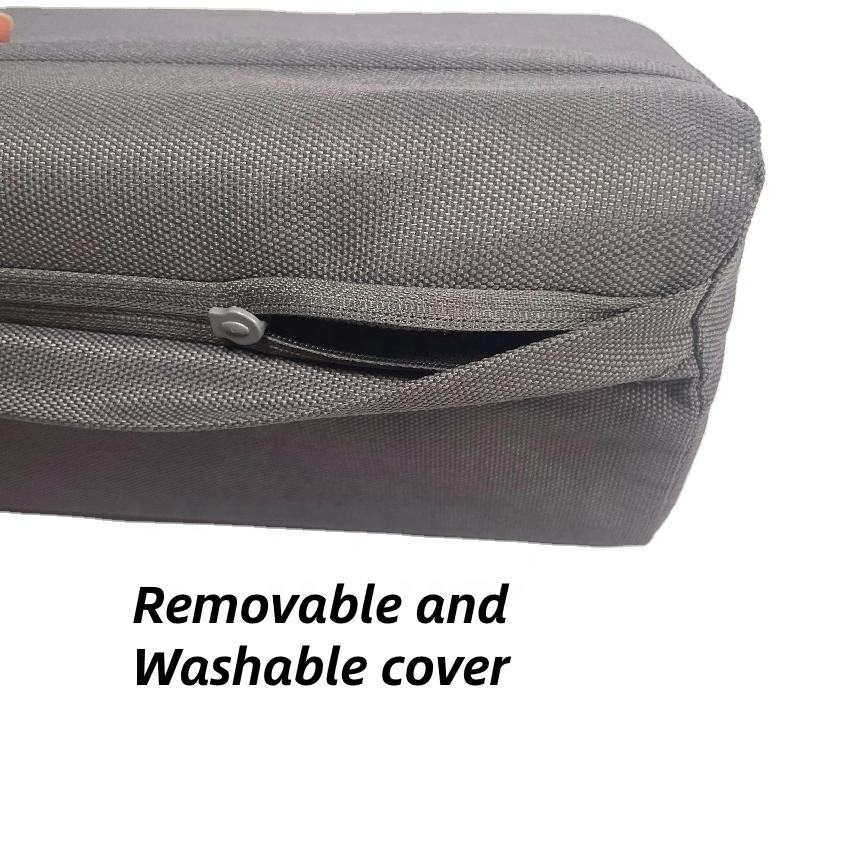
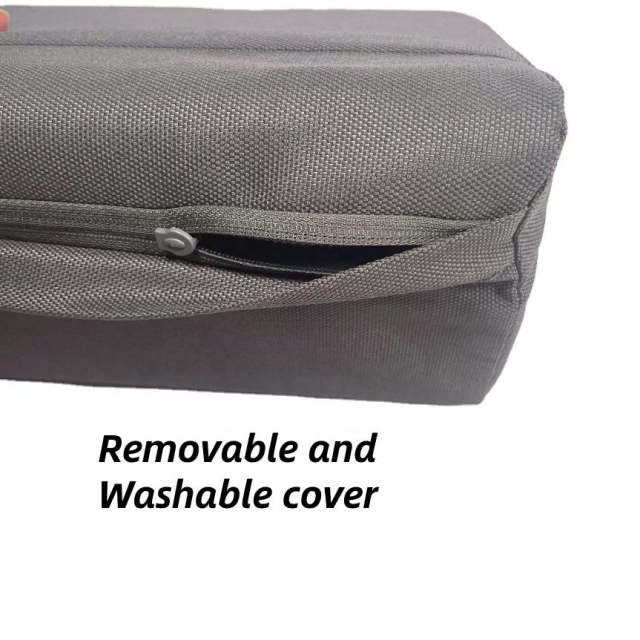
Unpick and wash: Removable and washable
Pattern: Solid
Weight: 0.5-1kg
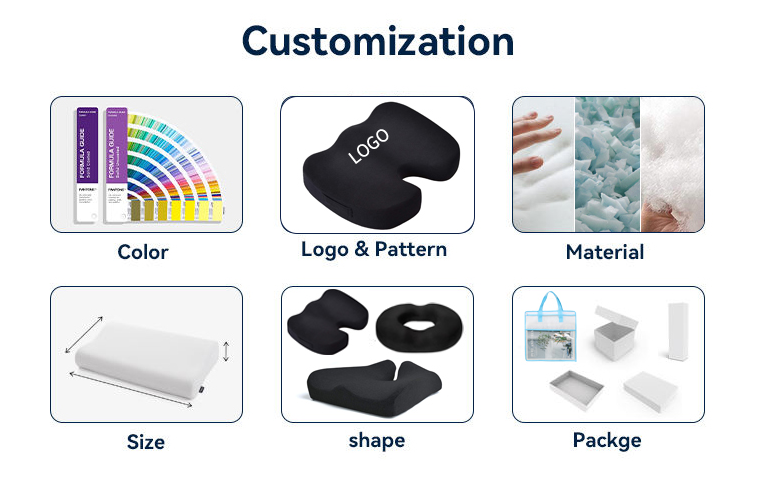
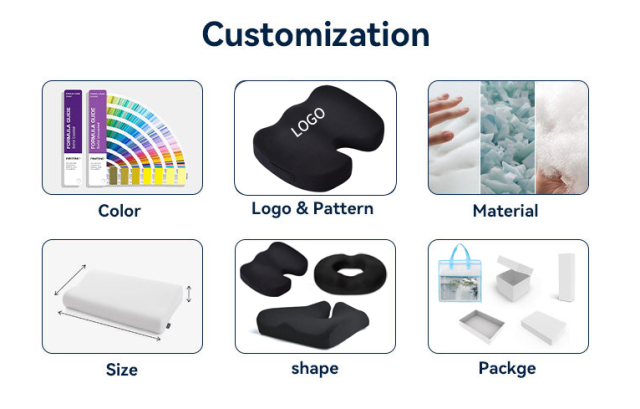
Customized: Yes
Polybag + carton 1pc/polybag/handle bag,or as requested
Port: Shanghai
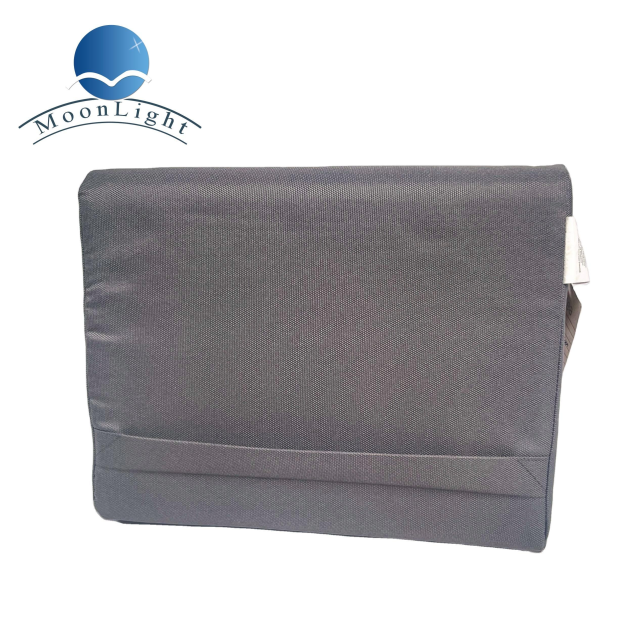
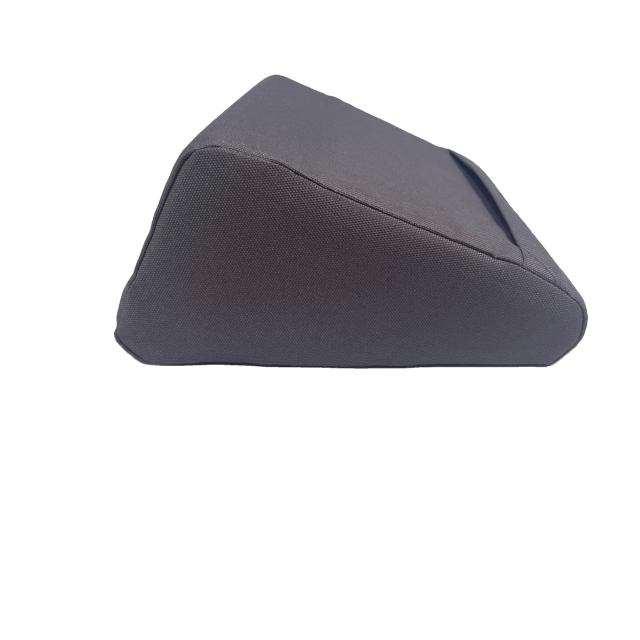
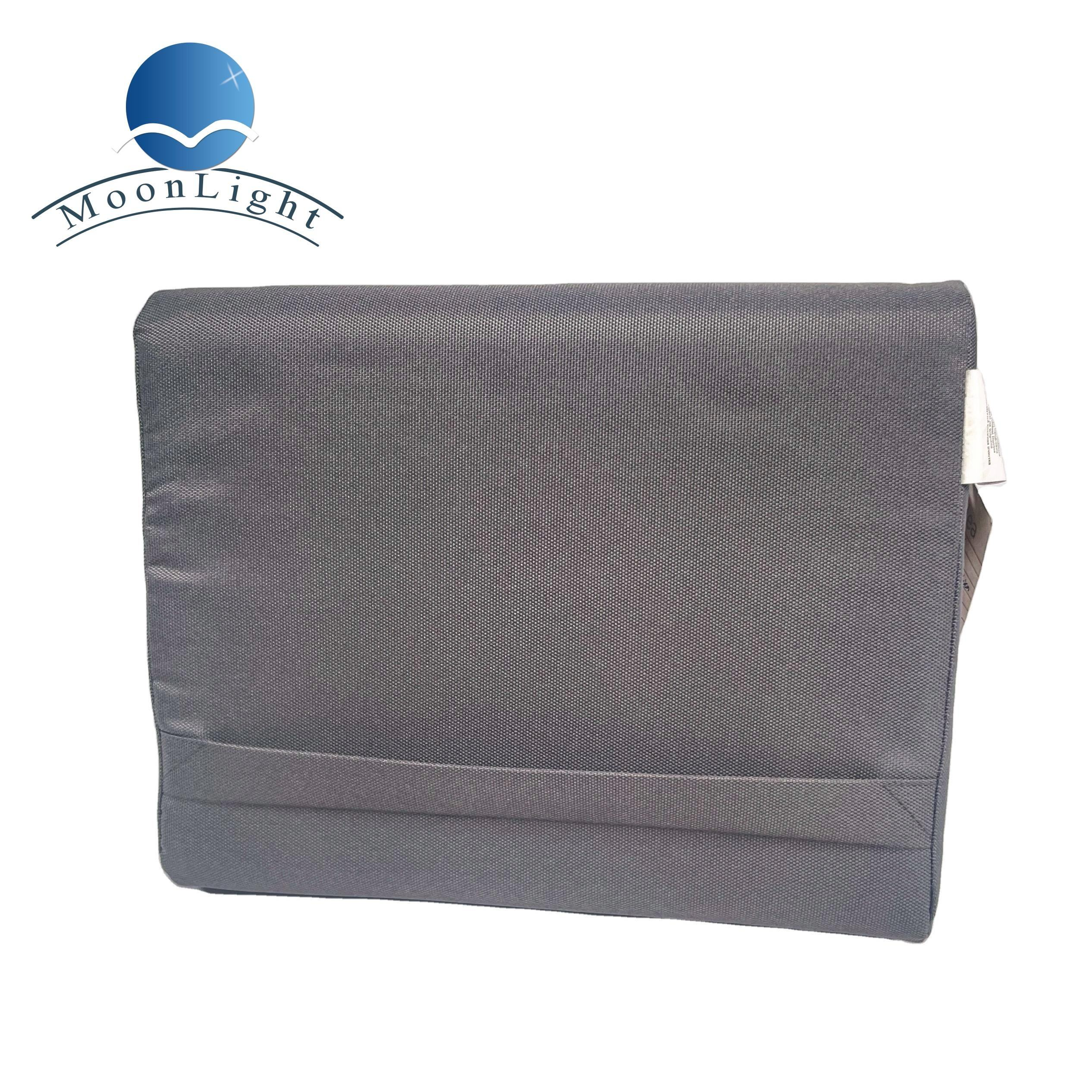
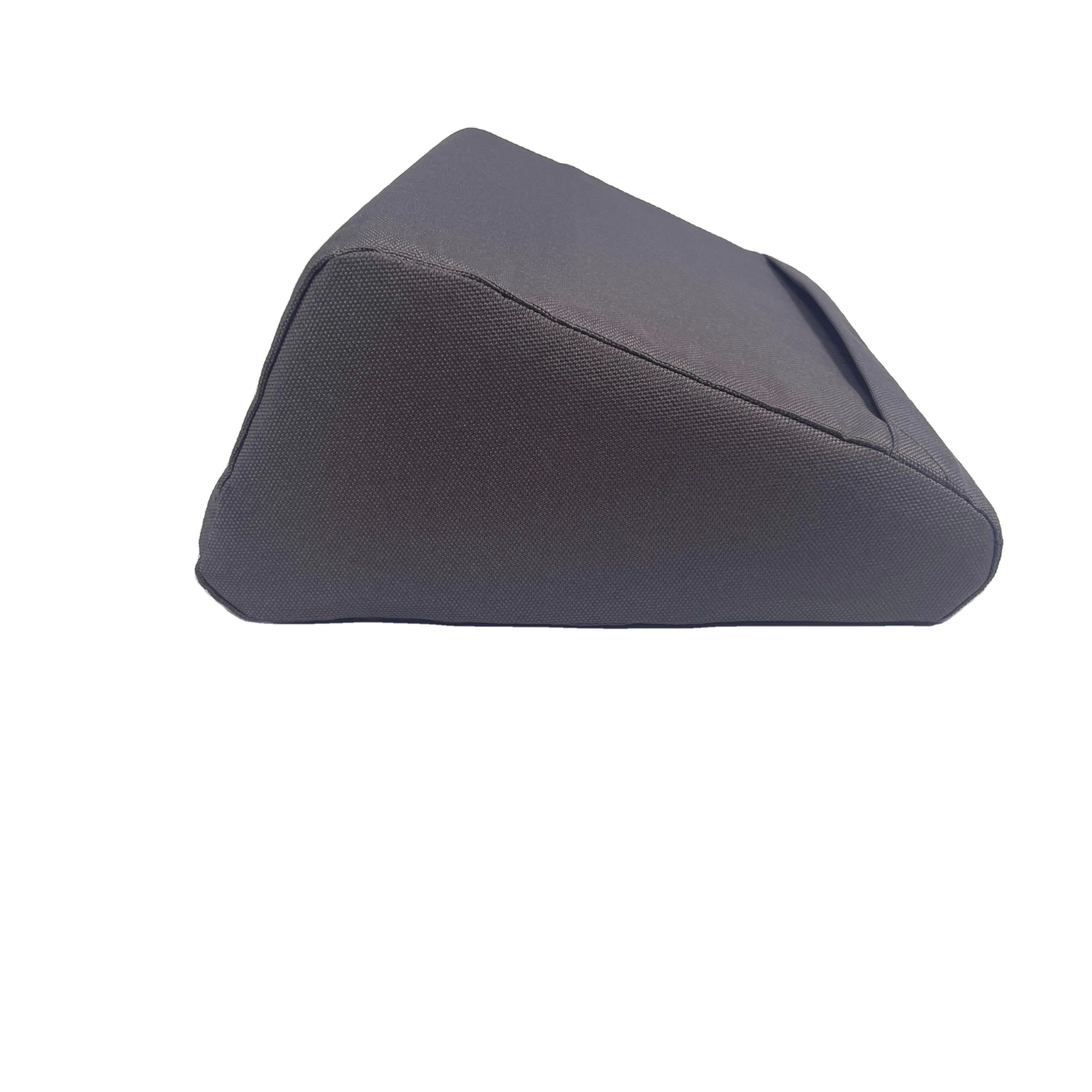
The triangle tablet stand pillow is a memory foam holder cushion for phone and tablet — a hands-free, quilted wedge that holds a screen at a comfortable angle while you read, watch a film or sit through a video call. It is light enough to carry from the bedroom to the kitchen and steady enough to stay where you put it down.
We build it at our pillow tablet holder factory in Nantong, Jiangsu, where we have made household textiles since 2001: memory foam pillows, pregnancy pillows, cushions and dog beds. This model belongs to the cushion family but does a different job. It is a device accessory, not a support cushion — the foam is shaped to hold a screen steady, not to press into your back or neck.
Day to day it ends up where a tablet usually goes: on a bed, on a sofa arm, on a lap tray, on a desk. The flat base spreads the load so the wedge does not tip when you tap the screen, and the whole stand lifts in one hand. It is the sort of accessory that stays in use rather than in a drawer, which is what makes it worth listing beside a cushion line.
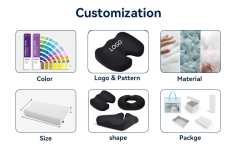
For a brand, a distributor or a marketplace seller, the appeal is a small, low-cube item that can be made in the same fabric and colour story as the rest of the range. Cover, logo, size and pattern are set at production level, so the stand carries your own look rather than the generic grey wedge every other seller lists.

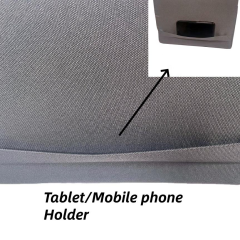
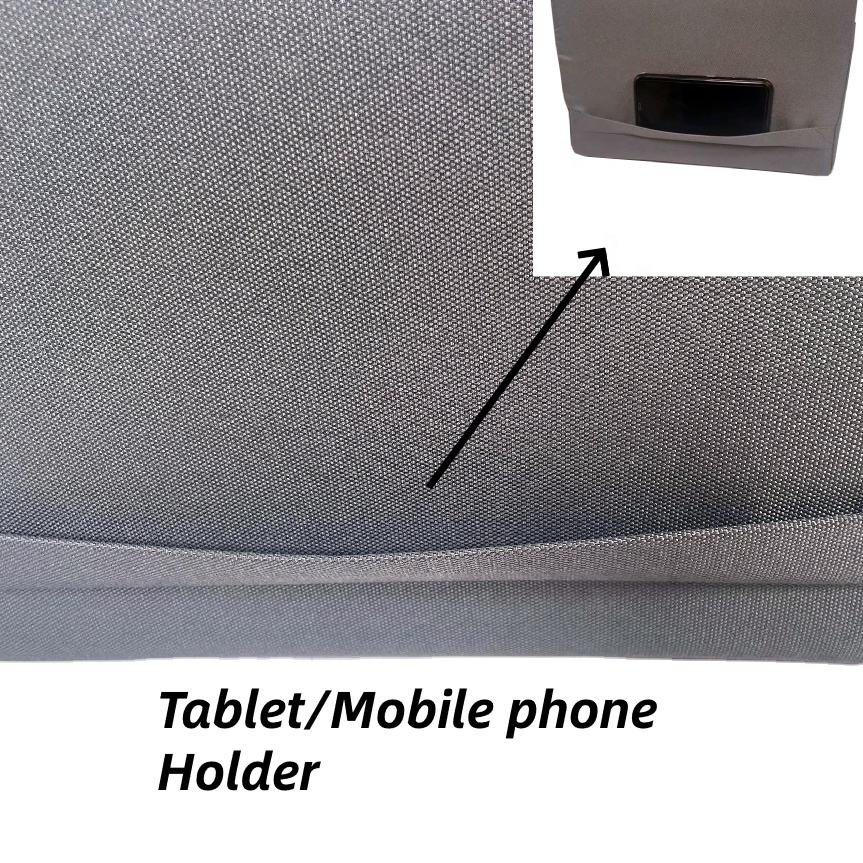
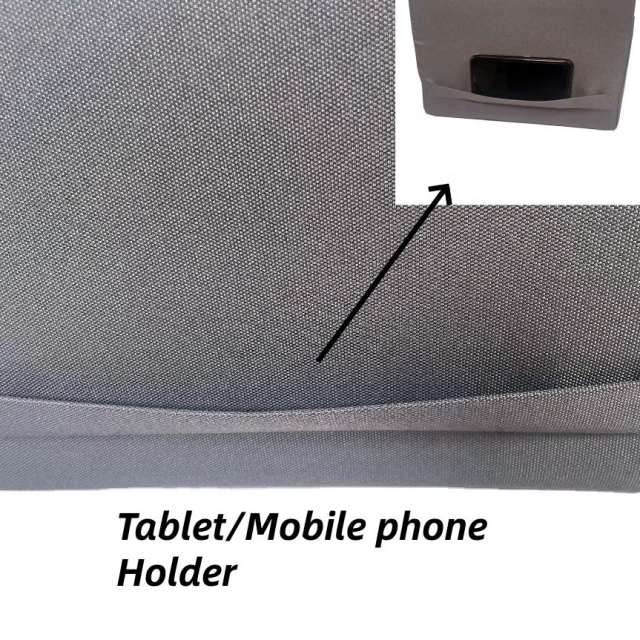
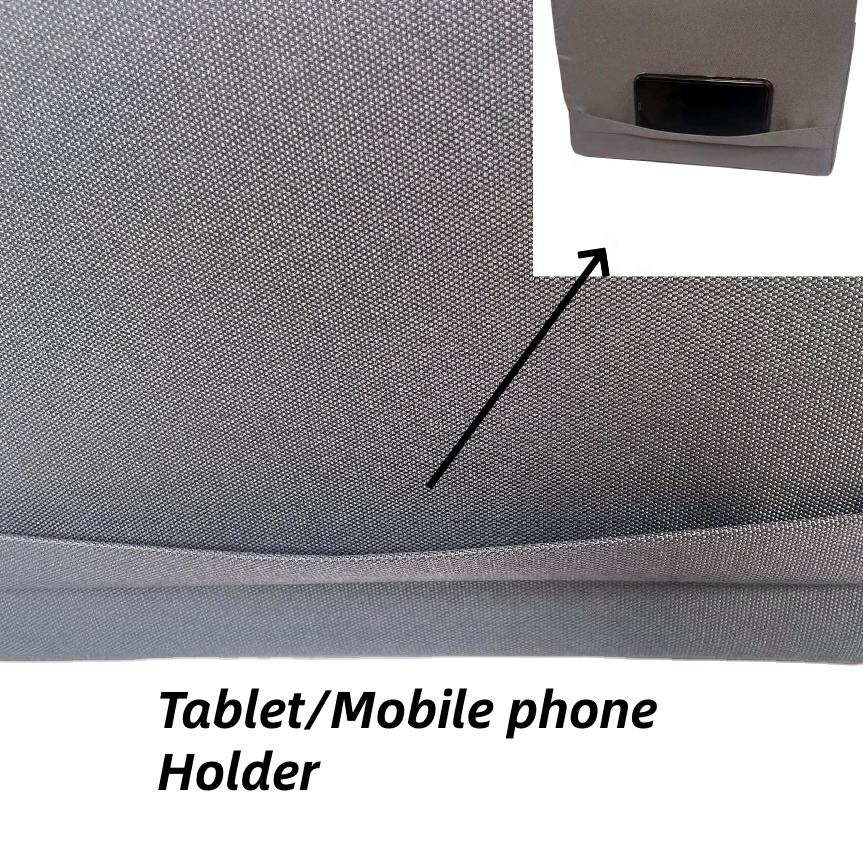
Cover fabric. Sandwich mesh is a three-layer knit — two faces with a spacer structure between them. Air moves through the mesh instead of sitting against it, which is why the stand stays pleasant to touch in a warm room and does not go damp after a long call. The surface has a fine woven texture, so a device rests against gentle friction rather than sliding on a slick print. Quilting and seams. The cover is quilted before it goes onto the foam, and the quilt lines hold the block in position inside the case. Seams run along the edges and around the base, and the base carries the zip, so the cover opens flat when it comes off. Foam core. The filling is memory foam cut to the triangle rather than stuffed into it, which keeps the faces flat and gives the front panel a straight edge for a device to lean against. Because the foam is there to hold a device rather than to be a soft novelty, the wedge pushes back firmly when you press the screen — you feel a steady resistance, not a slow sag. If your range needs a firmer or softer push-back, raise it before the sample is signed off so the foam can be set to your brief. - Angled viewing face — the triangular profile lifts a screen towards the viewer, so you sit back and look forward instead of hunching over a tablet lying flat on the bed. - Breathable sandwich mesh cover — the mesh face lets air move through rather than trapping it, so the stand does not feel warm or clammy after an hour against a duvet or in your hands. - Memory foam core — the foam takes the shape of whatever rests on it and eases back when the device is lifted, so the surface does not stay dented from one long session. - Quilted construction — the quilt lines run through the cover and anchor the foam block, which stops the filling drifting into one corner after weeks of handling. - Removable, washable cover — a zip along the base releases the cover completely, so the fabric can be washed while the foam stays dry. - Side pocket — a pocket sewn into the side keeps a phone, a remote or a stylus within reach while the main face holds the tablet. - Easy to move — light enough to carry between rooms, pack beside folded clothes for a weekend away, or set on a lap tray without balancing.

| Specification | Detail |
|---|---|
| Item | Phone stand,Tablet Stand |
| Place of origin | China |
| Brand | Moonlight |
| Shape | Triangle |
| Size | 32*23*14cm |
| Cover | Sandwich mesh fabric |
| Filling | Memory foam |
| Pattern | Solid |
| Weight | 0.5–1 kg |
| Cover care | Removable and washable |
| Customization | Yes, built to your specification |
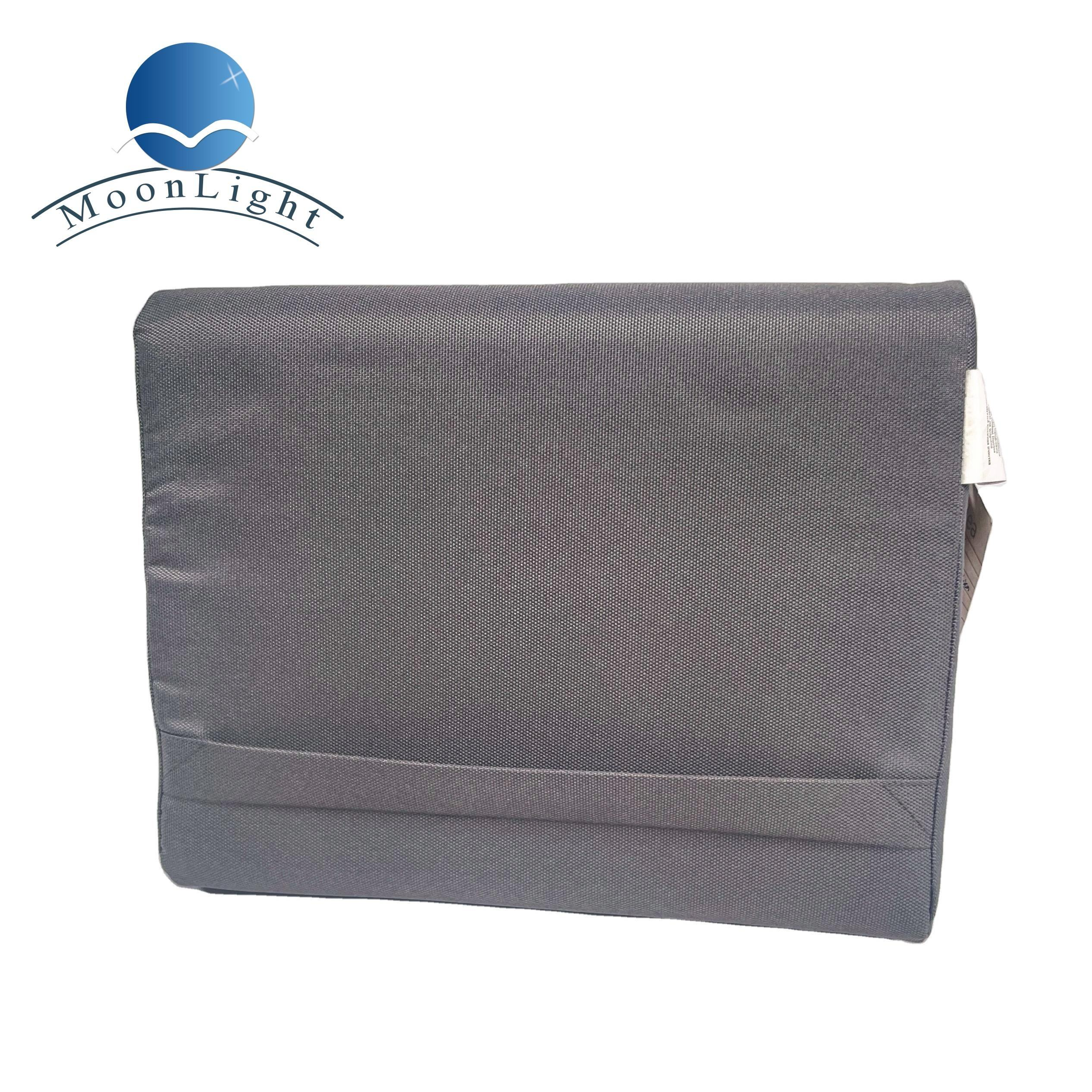
The footprint decides where the stand will live: the depth of the base is what it needs on a bedside table, a window sill or a serving tray, and the width leaves room to rest a tablet in landscape without the corners overhanging. The exact figures sit in the specifications above, and they are worth checking against the devices your customers actually use.
The slope is set by the relationship between the height at the back and the depth of the base. A phone placed near the front edge stands close to upright, which suits calls and messages; a tablet moved up the slope settles at a shallower angle that suits watching. Reading in bed, that arrangement usually puts the screen at a comfortable height once you are propped against a pillow, without holding anything.
Where the standard wedge does not suit a device in your range, this memory foam holder cushion for phone and tablet can be built to a different size at production. A wider base steadies a larger tablet; a taller back steepens the angle for a smaller screen. Both change the footprint, so decide the device mix first and the dimensions second.
One thing worth settling early: the surface the stand will sit on. A firm mattress, a desk or a tray gives the flat base something to work against; a deep, soft duvet does not. That is a question of where the end customer uses it rather than a fault in the product, and it is worth saying in your own listing copy.
Will it stay steady on a bed or a sofa? On a firm mattress or a sofa seat, yes: the flat base spreads the load and the fabric cover grips the fabric underneath. On a deep, soft duvet the base sinks and the wedge can lean, so it works better pushed against the mattress edge or rested on a folded blanket. It is also forgiving — the foam damps small knocks, so tapping the screen moves the stand far less than a hard plastic cradle would. Can it be used on a lap or a tray? Yes, and it sits still on a lap tray or on a cushion across your knees without a clamp. A phone is comfortable that way for long stretches; a large tablet is better with the stand leaned against your legs as well, so the weight is shared. Does it need a non-slip mat underneath? Usually not. The base is flat, fabric-covered foam and holds on wood, laminate, glass and mattress ticking. On a polished glass desk in a dusty room, a small silicone pad under the base makes the difference.
| Option | What can be adjusted |
| Cover colour | Matched to your Pantone fabric reference |
| Logo | Printed or embroidered to your artwork |
| Cover fabric | Sandwich mesh as standard; other cover fabrics discussed at sampling |
| Size | 32*23*14cm |
| Shape | Triangle |
| Pattern | Solid as standard; custom print available |
Everyday handling. Lift the stand by the base rather than the front panel, and keep the zip closed in use so the teeth do not catch on a sleeve or a sheet. Set it down on a flat surface rather than dropping it; the foam is resilient, but the quilt lines crease if the wedge is thrown into a bag.
Refitting the cover. Once the cover is clean and dry, slide the foam in flat side first, work the fabric down over the corners, then close the zip with the cover pulled taut so the front panel sits square. A cover that is slightly off-centre shows in the quilt lines and the device no longer rests flat.
The foam core. Memory foam does not go in a washing machine. Spot-clean marks with a damp cloth and mild soap, then air dry away from radiators and direct sun — heat softens the cell structure and the triangle loses its crisp edges.
Storage. Keep the stand flat or on its base, not crushed under heavier stock, and out of direct sunlight and hot vehicles. Long compression is recoverable, but the foam needs time to breathe back to thickness before it is packed for distribution.
What to avoid. Do not kneel or sit on the stand, do not use it as a step or a doorstop, and keep pens and scissors away from the mesh — a pulled thread in a spacer knit cannot be darned back to a flat surface.
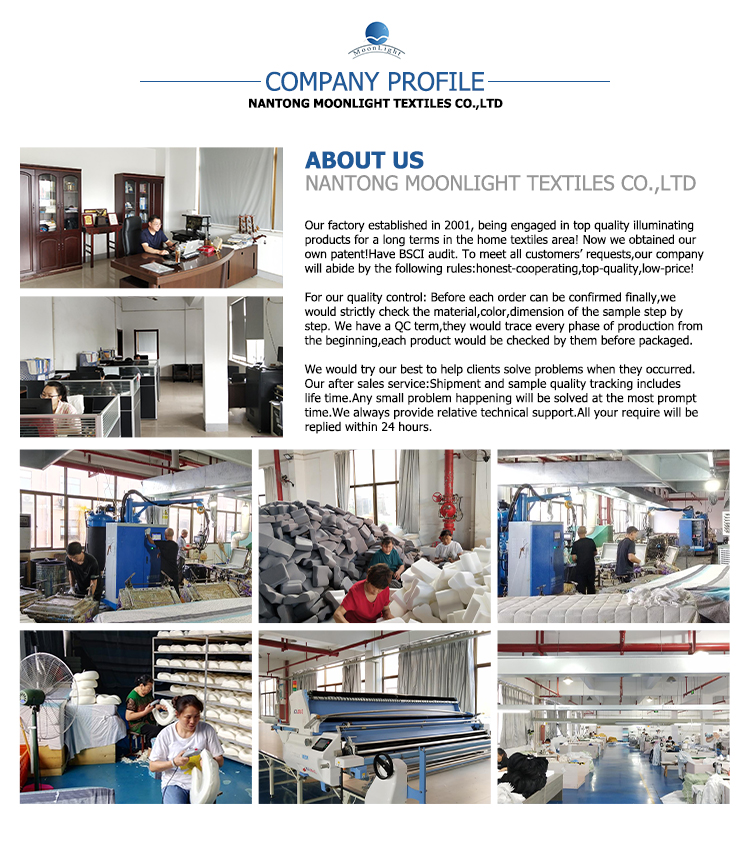
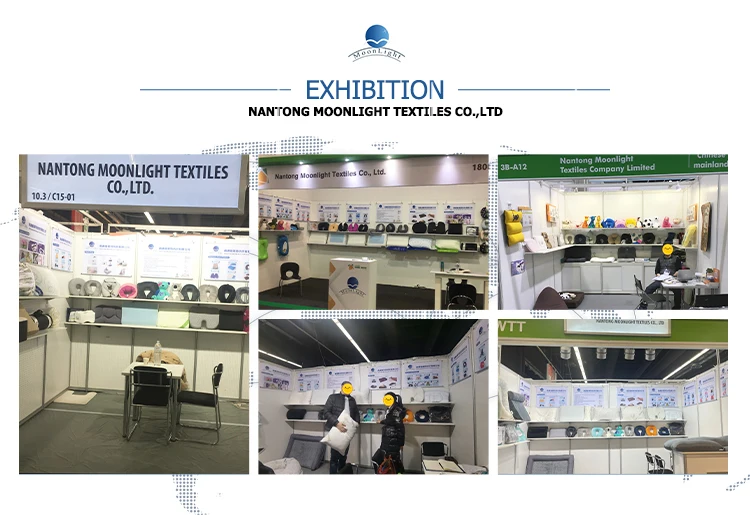
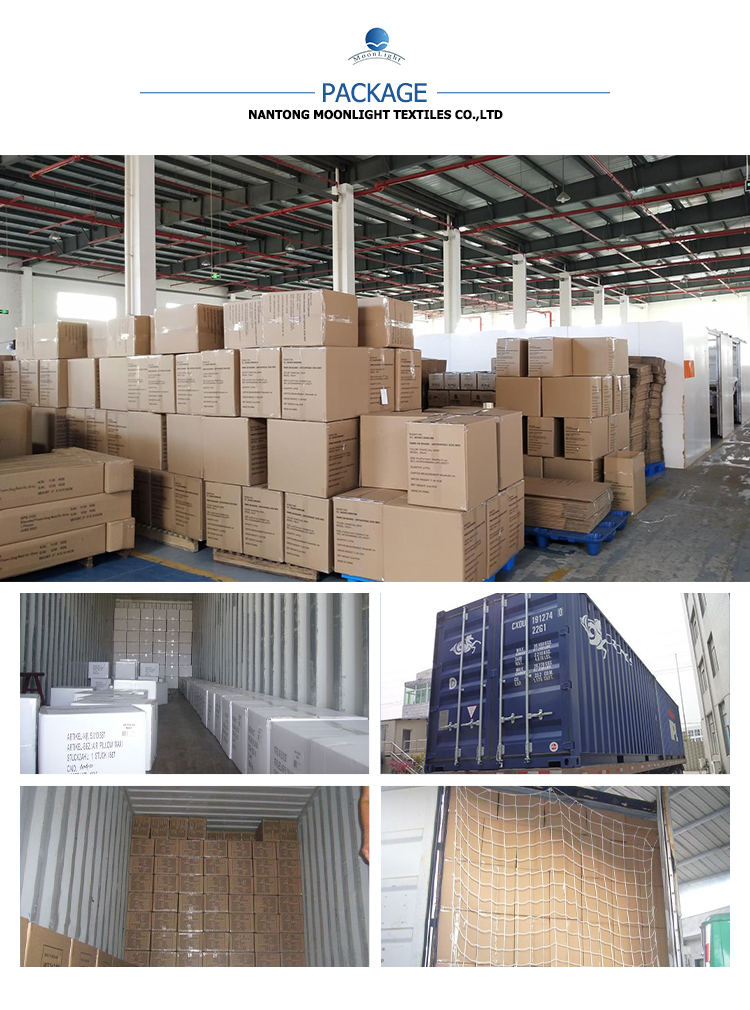
Quality is verified at each stage, not only at the end. Before bulk production we submit a pre-production sample for your approval, checking material, colour and dimensions step by step. Our QC team then follows every batch through production and inspects each piece before packing, with a final inspection before shipment. If your own team or a third-party inspector attends that final check, we plan production around it. Any issue found is raised with you before goods ship, and quality questions are answered within 24 hours. Our factory is BSCI-audited and OEKO-TEX certified.