Product Overview
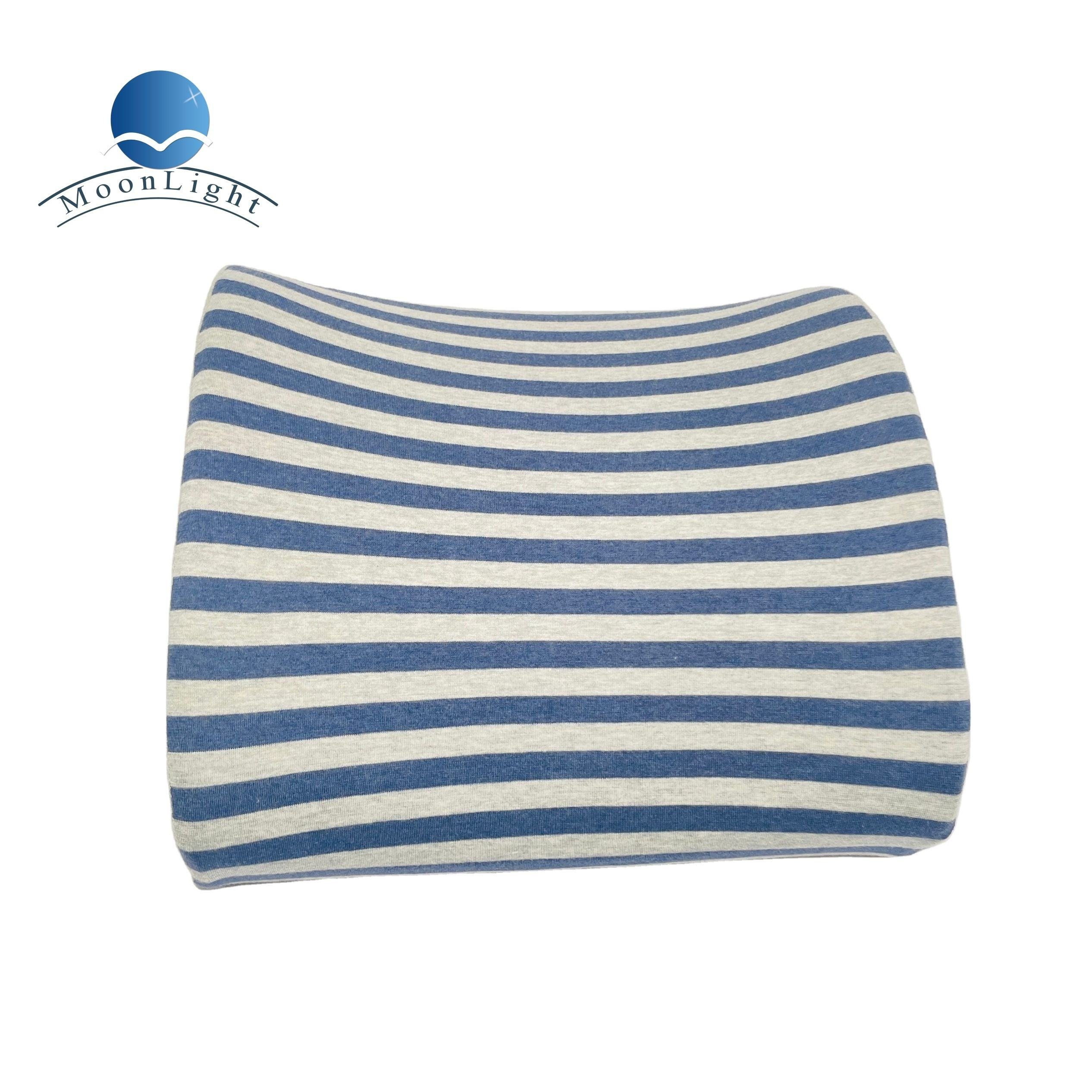
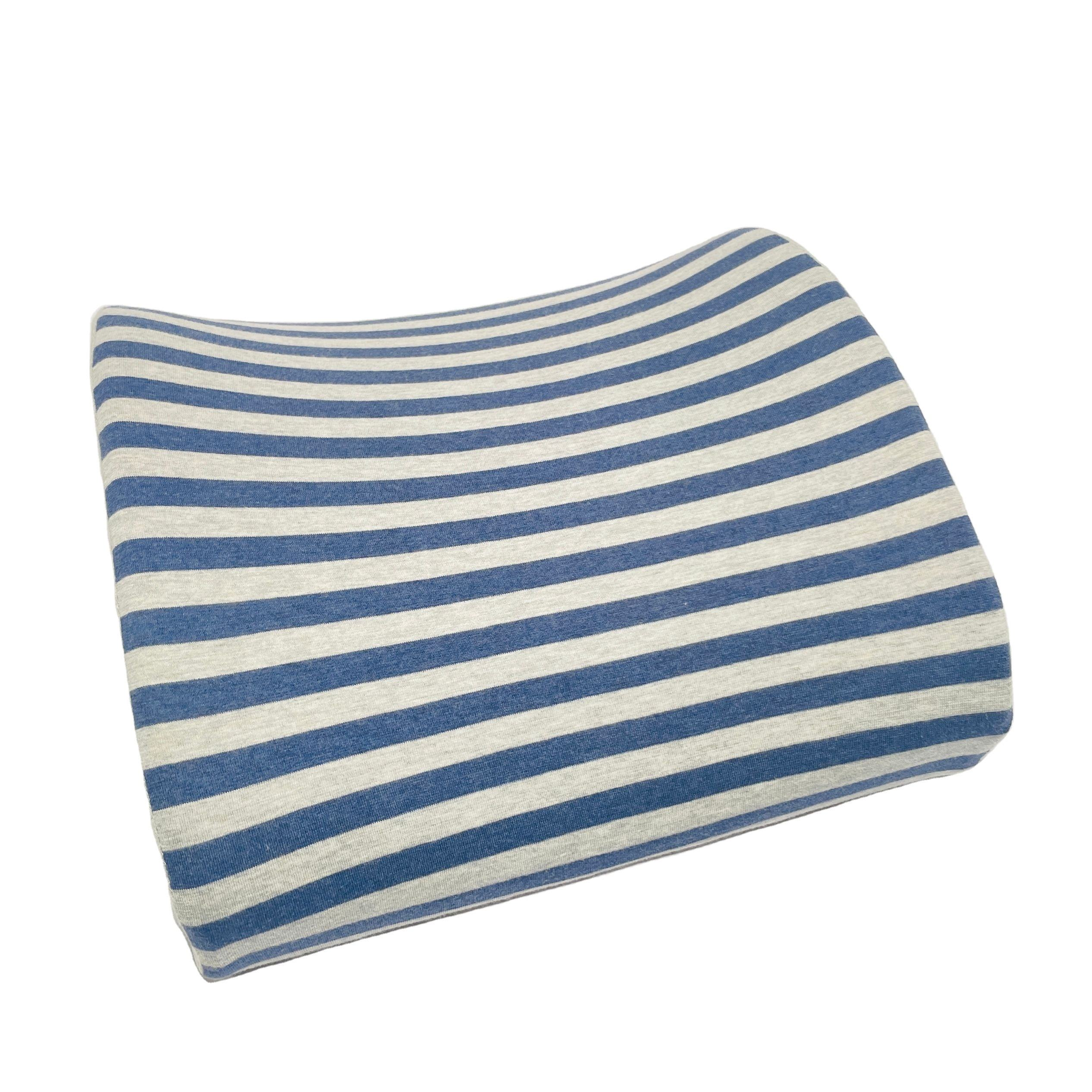
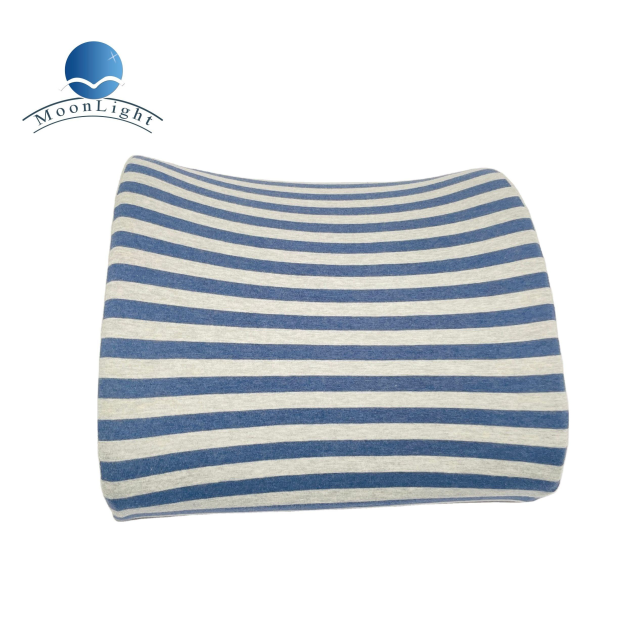
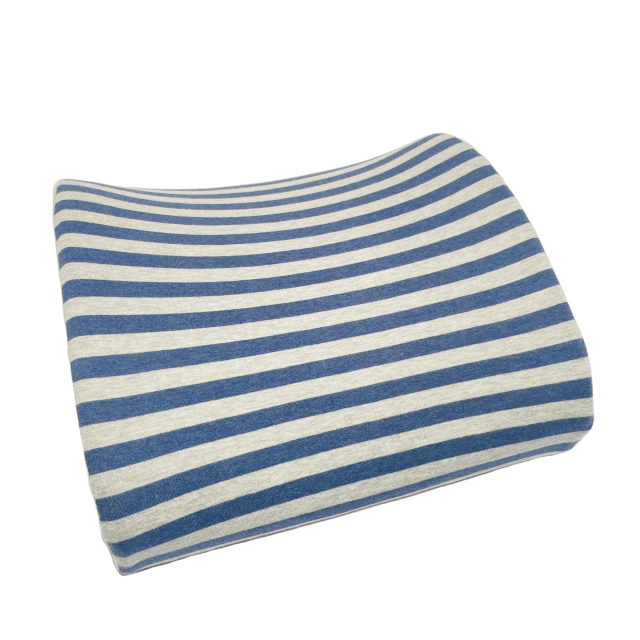
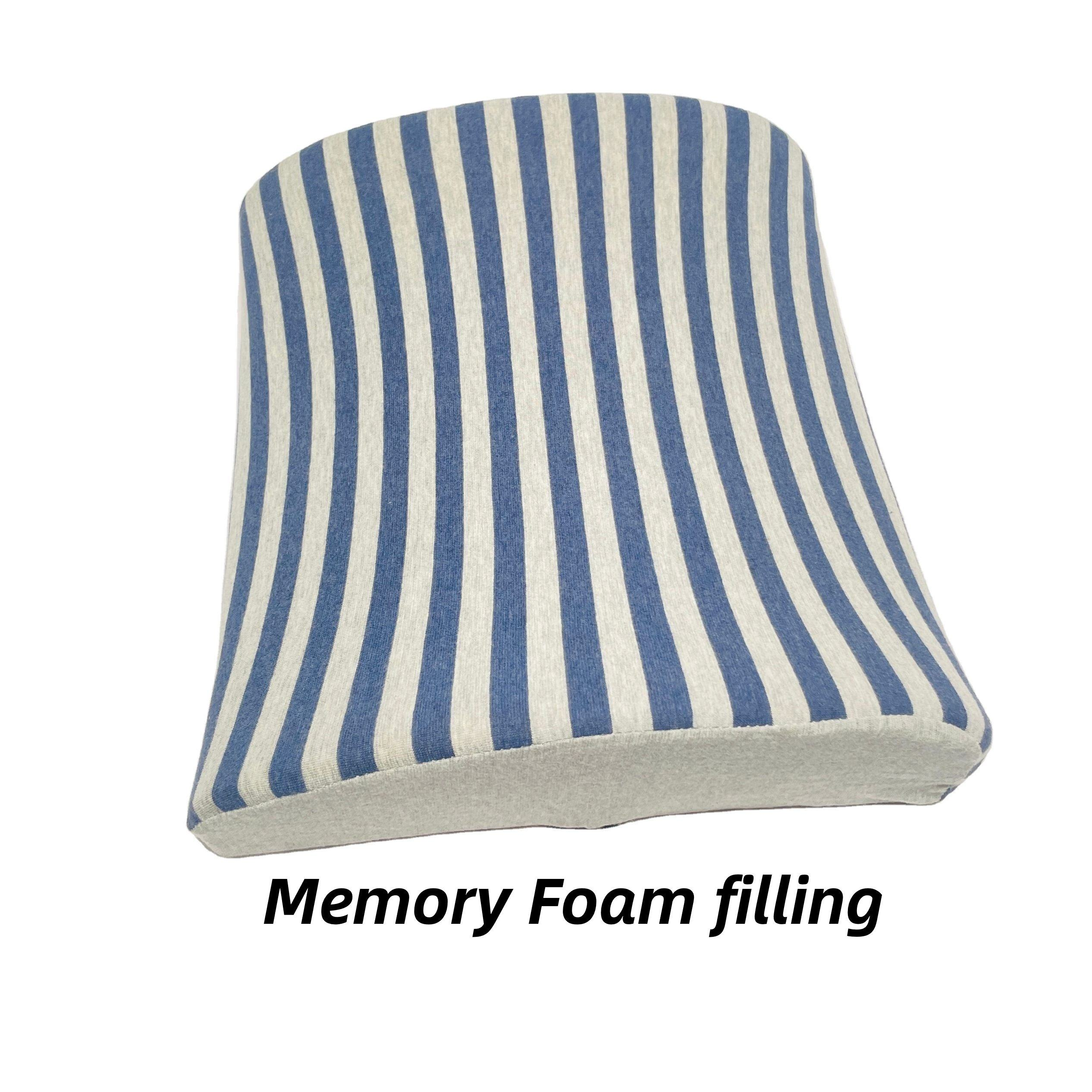
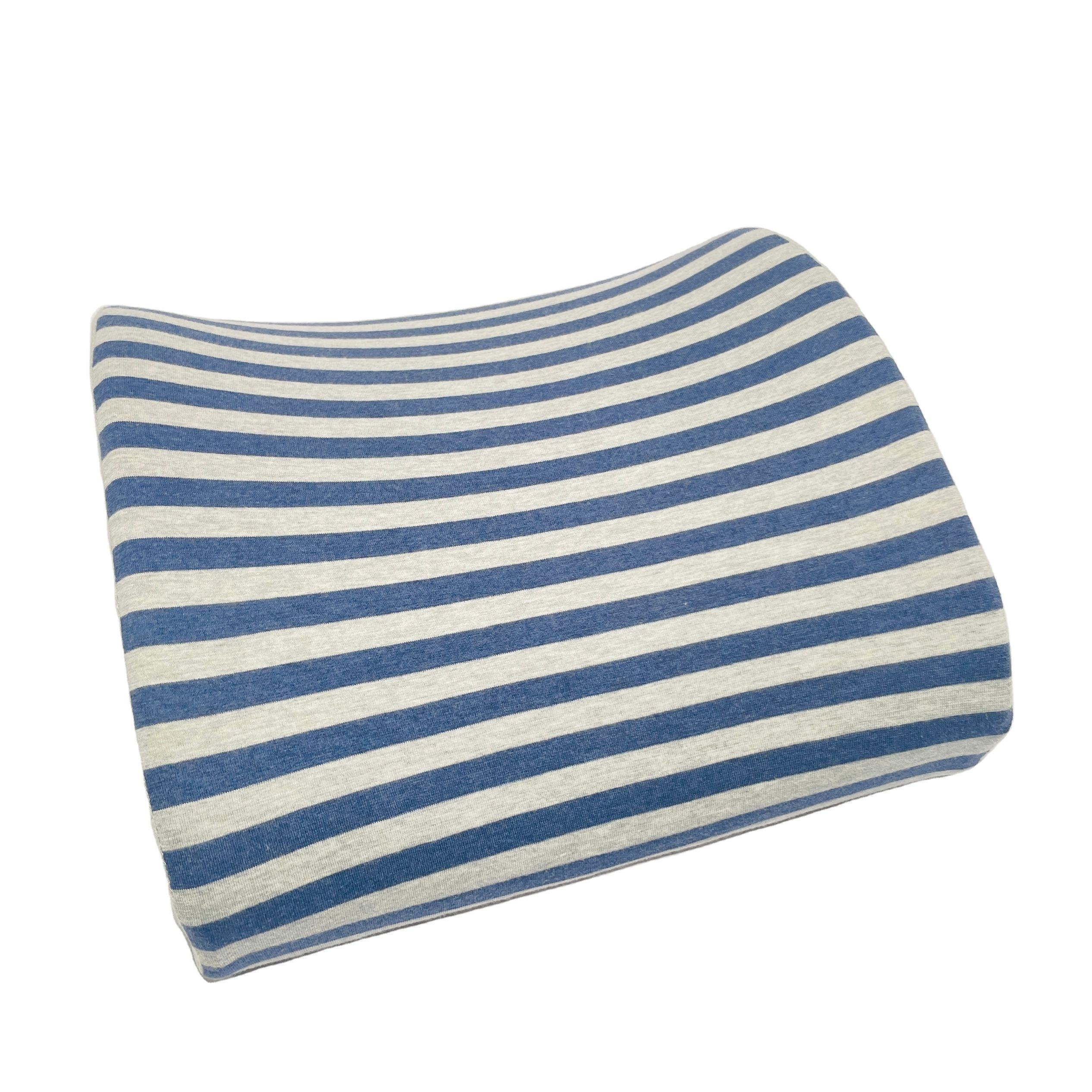
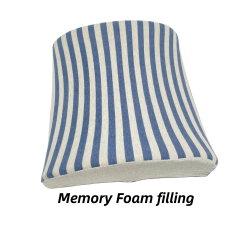
This striped lumbar support back cushion is a memory foam lumbar pillow for office chair use — a panel that adds a defined layer between the user and the chair back. It is not a chair pad and it does not rebuild the seat: it changes the point where the back meets the chair, which is the problem most people are trying to solve when a seat feels too deep, too upright or too hard. Buyers place it between seat pads and travel cushions in a range: more substantial than a travel pillow, more targeted than a seat cushion, and slim enough that it does not push the user forward off the seat. Construction is deliberately plain. A one-piece memory foam core sits inside a jersey fabric cover in a polyester/cotton blend, cut as a rounded rectangle so the corners do not dig into the back. The face shown is a blue-and-white stripe, which is the merchandising argument for this model: a decorative cushion among plain ones. Stripe, plain and dotted faces are all possible, and the face you receive is fixed by the swatch and sealed sample you approve rather than by a photograph. Office-product importers, auto-accessory distributors, gift ranges and workplace-wellness programmes use the same format with different covers and different end users in mind.
Material & Build
Jersey is a fine-gauge knit, and that choice does more work than it sounds. A knit gives in both directions, so the cover wraps the rounded edge of the foam instead of pulling tight across it and leaving a hollow behind the back. In a polyester/cotton blend the yarn also takes dyed colour and print evenly, which is why a stripe stays crisp along the seam line and does not go patchy after a wash.
The cover is cut as a rounded rectangle with a contrasting side panel; the sample carries a light grey band, which gives a clean edge in a side-on product photograph and covers the seam where the face meets the gusset. Stitching runs double along the edge that takes the load when the cover is pulled over the core.
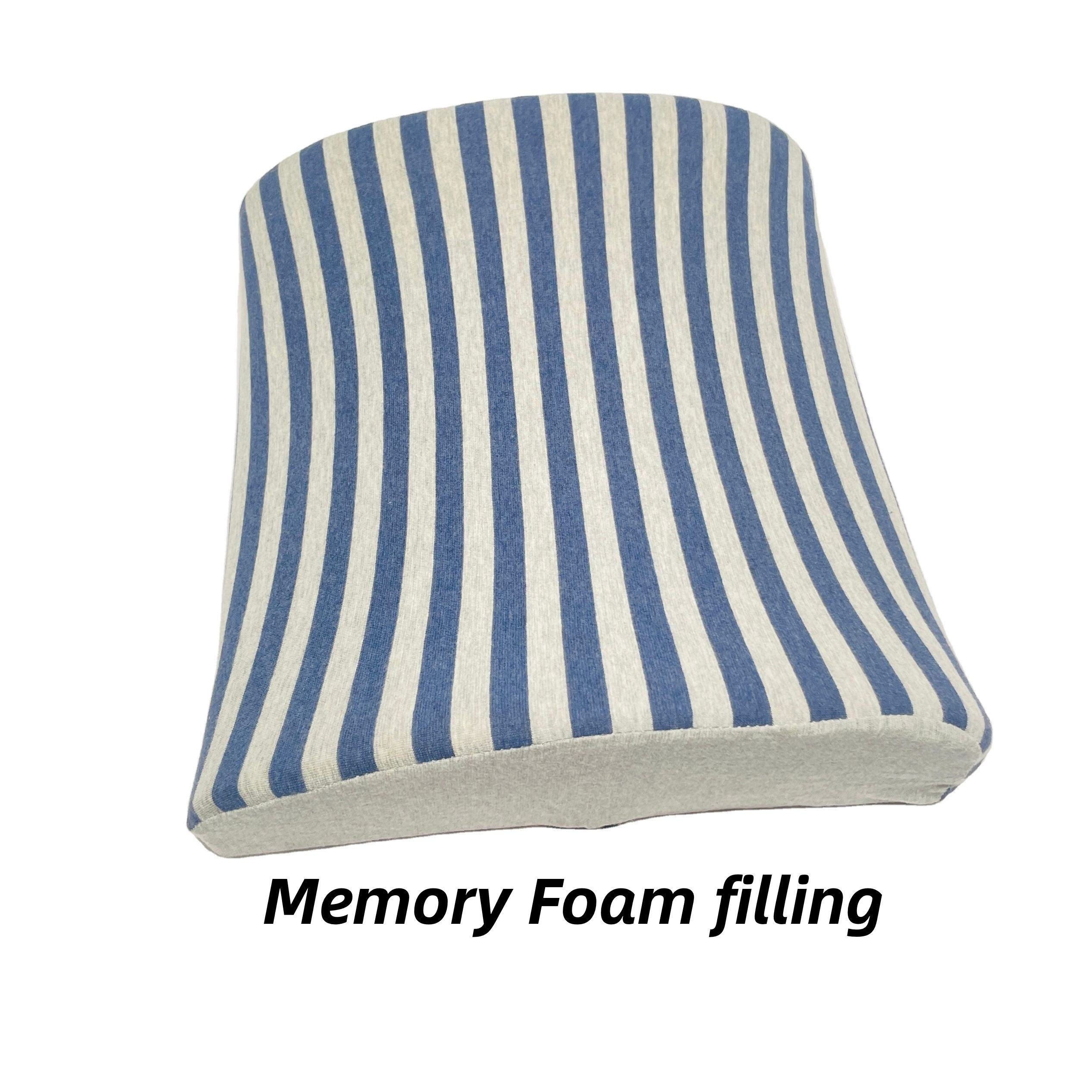
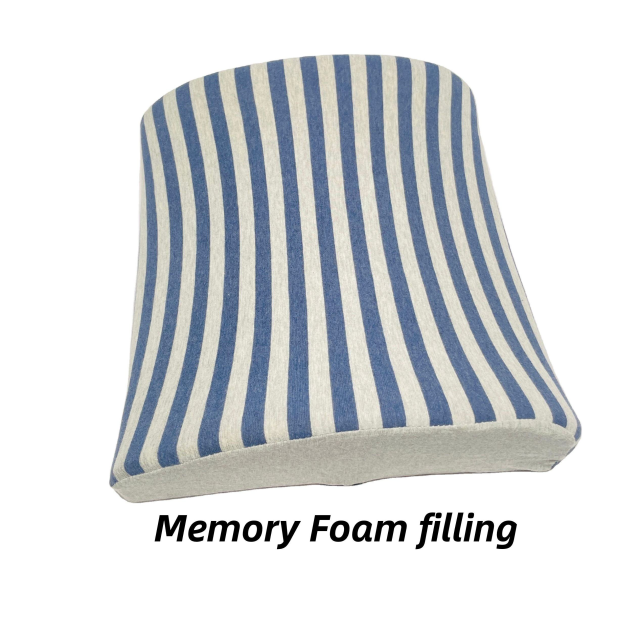
Inside, one piece of memory foam rather than shredded fill or a fibre wrap is what makes this a memory foam back cushion rather than a padded cover. The difference shows up months later: a one-piece core holds its shape across the whole panel, while shredded fill settles toward the bottom and leaves the upper half flat.
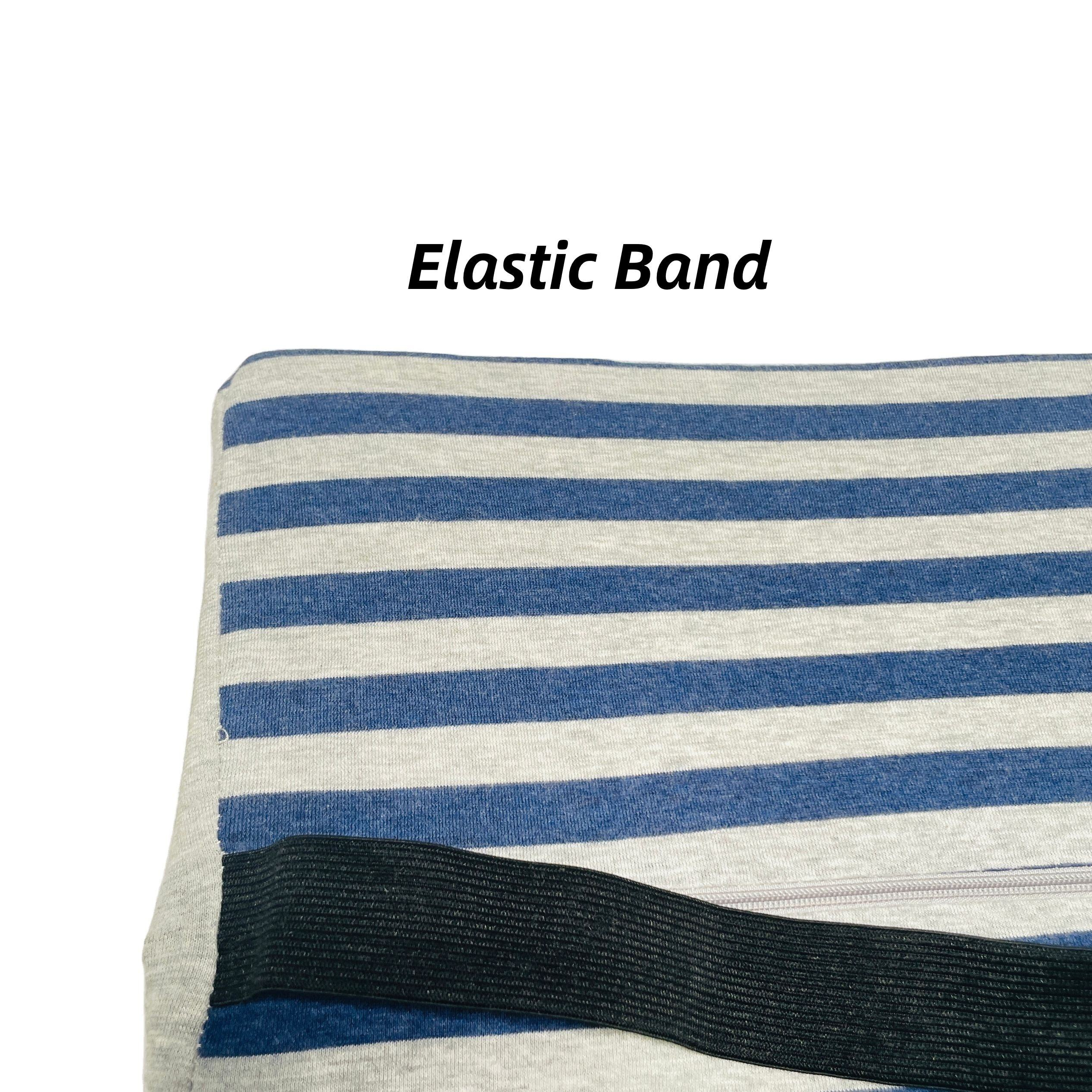
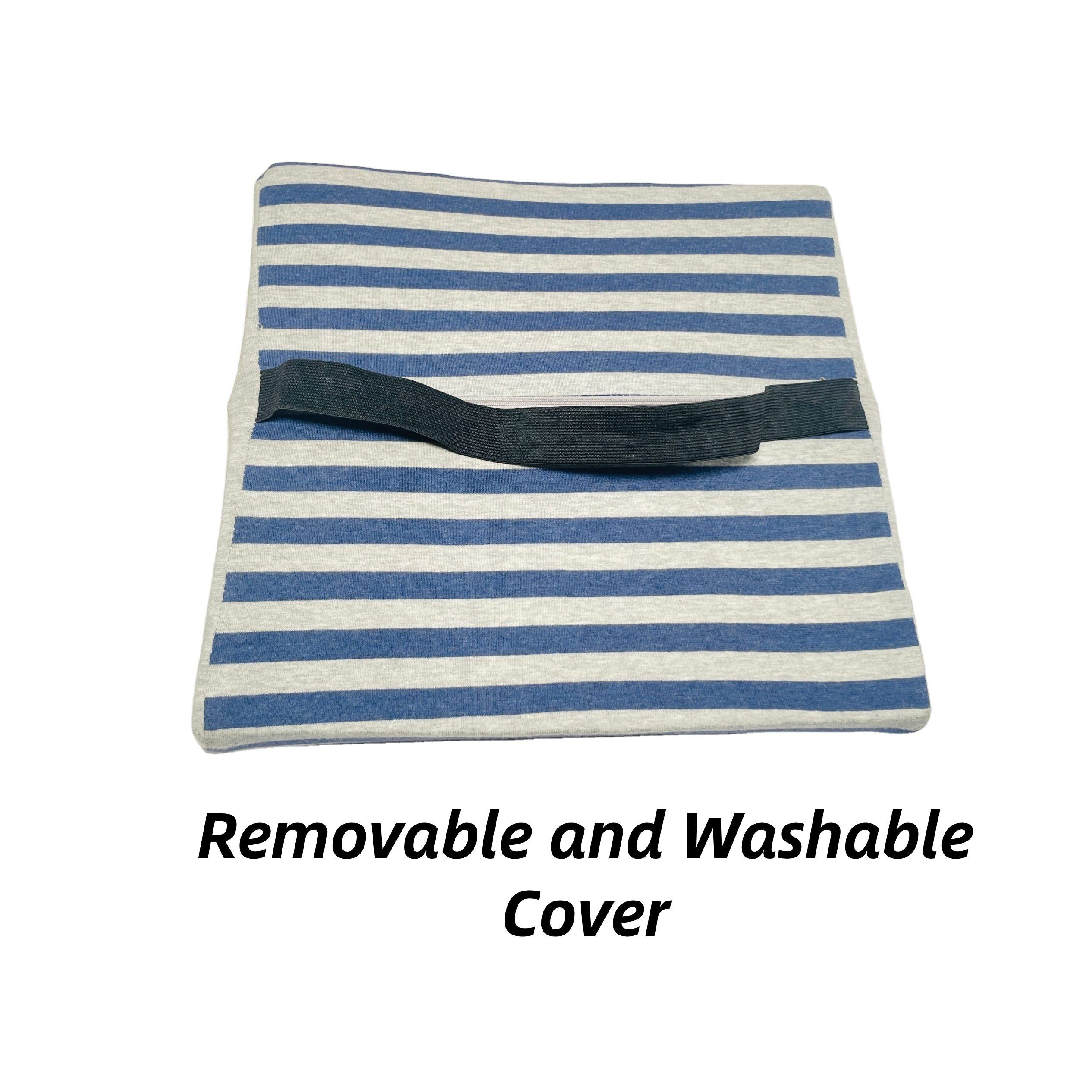
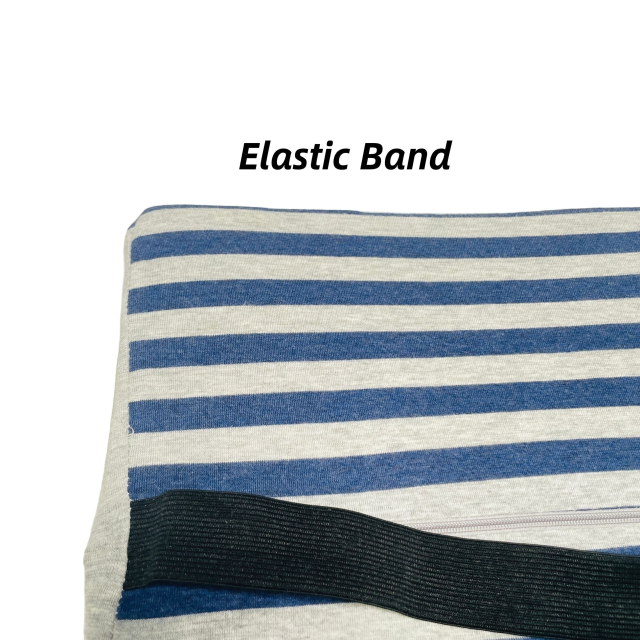
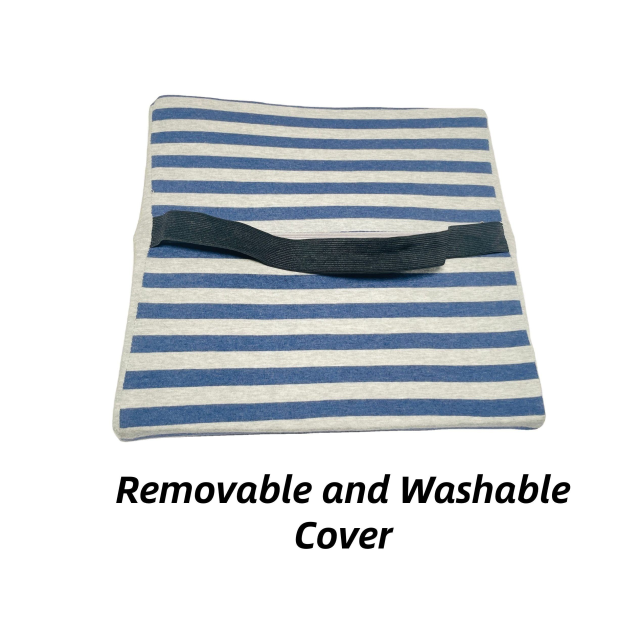
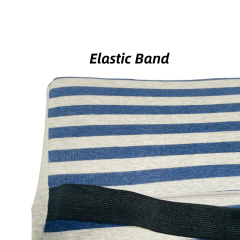
A black elastic band at each corner holds the cover on the core and lets it be pulled off and refitted by hand. Because the size is made to order, core and cover are both worked to the measurement you specify rather than to a single stock size, and the reference build finishes between 0.5 and 1 kg.
- Depth where it counts. The panel carries real depth at the reference build, so it separates the back from the chair instead of compressing to a thin layer under the first lean. - Memory foam, not fibre. The core takes the shape of the back resting against it and returns gradually when the user leans away, while loose fibre filling migrates downward and goes flat across a shift. - A jersey face that behaves like fabric. The polyester/cotton knit is smooth and matte, with enough stretch to follow the foam edge rather than bridging across it, and it stays quiet against a jacket or a shirt. - One cushion, two commutes. It works through a day of office hours and then moves into the car for the drive home, so one unit often replaces two single-purpose cushions. - Light enough to carry. At 0.5–1 kg the cushion lifts with one hand and stows in a tote or under a seat without dragging. - One specification all year. There is no summer and winter version — the same knit and the same foam grade go out year-round, so a repeat order matches the first one and a listing needs no seasonal rewrite. - A face that sells on a shelf. The stripe gives a wholesale buyer a visual break in a wall of plain back cushions, with plain and dot faces beside it for buyers who want a quieter look.
Size & Fit
- Start from the reference build. At 40 cm across, 50 cm down the back and 10 cm deep, this memory foam lumbar pillow for office chair use covers the lower and middle back on a standard task chair without reaching the headrest.
- Measure the chair, not the user. Note the back height from the seat, the width at lumbar level, and how far forward the user already sits; a 10 cm panel needs that much room before the seat gets crowded.
- Shorten it for narrow chairs. On a narrow mesh-back chair the striped lumbar support back cushion can overhang at the edges, which reads badly in a product photo and lets the cover curl; a smaller face keeps it tight.
- Keep the full drop for lounge chairs. Where the back is tall and open, the 50 cm drop covers more of the mid back and stops the cushion riding up when the user shifts.
- Change the size on the order, not after it. Custom sizes are quoted per order; write the measurement points, the foam tolerance and the finished tolerance into the purchase order so the approved sample and the bulk run agree.
- Where it is not the answer. Deep bucket seats with hard side bolsters, or a user who needs an angled wedge to hold a lumbar curve, are better served by a shaped wedge cushion — this flat format works by adding depth, not by forcing a posture.
Seating Applications
- Office chairs and sit-stand desks. Used as a memory foam lumbar pillow for office chair hours, it holds the lower back slightly forward of the chair's own surface, and it behaves the same whether the desk is raised or lowered.
- Cars, vans and taxis. The seat-back hinge leaves a gap at the base of the spine on most vehicles; this panel fills it, so the lower back has something to rest against from the first mile.
- Home workstations and dining chairs. A memory foam back cushion turns a hard wooden or spindle chair into something a person can sit through a long afternoon in.
- Reading chairs and sofas. Where the back is deep and soft, the panel gives the lower back something to rest against instead of sinking into the upholstery.
- Clinics and shared desks. Where cushions are cleaned between users as part of a hygiene routine, the cover is treated as a replaceable part — order spares with the batch and a cushion stays in service far longer.
- Gift and promotional ranges. A logo or embroidered face takes the same cushion into corporate gifting and seasonal programmes, where a plain cushion would not be ordered at all.
- Private-label office and ergonomic brands. You need one back cushion that carries your own label and repeats exactly from batch to batch: swatch approved, sample sealed, size and colour fixed on the order. The striped face gives you a shelf difference from the plain cushions already in the range, and the same specification can be reordered without renegotiating it. - Marketplace and e-commerce sellers. One product covers desk and car use, so it can be photographed in both settings and explained in a sentence: a deep memory foam panel behind the back, light enough to carry, cover off for washing. Each colour and size becomes a listing decision rather than a new development project. - Auto-accessory and fleet distributors. A vehicle seat back leaves a gap at the base of the spine, and a flat panel fills it without altering the seat. Fleet buyers work to a fixed specification and reorder the same one, which suits a rolling replacement programme better than a one-off purchase. - Gift, promotional and home-textile importers. Logo, embroidery, printed label and a colour box or handle bag turn the same cushion into a corporate gift or a seasonal line item, and it can travel in one container alongside seat cushions, wedge lumbar cushions, footrests and travel pillows from the same range. - Clinics, shared desks and workplace programmes. Where a cushion is wiped down or re-covered between users, the cover is the replaceable part — ask for spare covers with the batch and the foam core stays in service far longer. The striped lumbar support back cushion can also be specified plain or dotted where a quieter, more clinical look is wanted.
Specifications
Spec sheets for this cushion carry the line “Feature: Memory, Massage”, which raises a fair question from buyers: is the massage part a mechanism? It is not. There is no motor, no battery, no switch and no cable in the product — nothing to charge, nothing to service and nothing that needs an electronics declaration. “Memory” names the memory foam core, and “massage” names the raised dot texture recorded under pattern type, a nodular face that rests against the back. The finished weight belongs to a textile cushion, not to a device. What the dot face does. The points are formed in the cover, set close together, so the back rests on a textured surface instead of a flat knit and the cushion shows a visible pattern on a shelf or in a photograph. The face does not knead, vibrate, warm or pulse, and it is not a replacement for a handheld massager. If you would rather sell a smooth surface, order the plain face or the stripe and the massage wording leaves the specification altogether. Wording that holds up. Write the order line as “memory foam core, textured (dot) face” so purchasing, QC and customer service are all reading the same description. In pack copy and product text, call the surface textured or dotted rather than describing a massaging action; a claim that suggests a powered function sets an expectation the cushion cannot meet once it is in someone’s chair. Battery, charging and EMC statements do not apply to this memory foam back cushion and should not be prepared for it. Therapeutic or pain-relief claims do not belong here either — the support comes from the depth of the foam behind the back, not from the pattern on the cover.
| Item | Memory foam back cushion (MLMC037) |
|---|
| Brand | Moonlight |
| Place of origin | China |
| Material | Jersey fabric,polyester/cotton |
| Filling | Memory foam |
| Feature | Memory, Massage |
| Style | Plain |
| Pattern type | DOT |
| Season | All-Season |
| Grade | Quality |
| Part | Back |
| Weight | 0.5-1 Kg |
| Reference size | 40 × 50 × 10 cm |
| Size | customized |
| Colour | Customized |
| Customized | Yes |
Cover Care & Cleaning
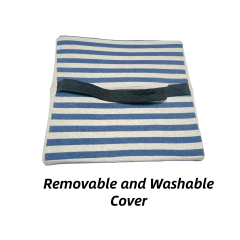
- Lift the cover off before washing. The elastic corners release by hand, and the foam core stays out of the machine.
- Wash the cover at the temperature your care label states. Agree that wording with us when the order is placed, so the temperature, drying instruction and fibre content match your listing, your packaging and your compliance file.
- Clean the foam core with a damp cloth and a little mild soap if it marks, then air it away from direct heat and sunlight; memory foam should never go through a tumble dryer.
- Dry the cover completely before refitting. A slightly damp cover puts moisture against the foam, and that is what turns into odour in storage.
- Between washes, brush or vacuum the face to lift dust out of the knit; a soft brush is enough and keeps the stripe from looking flat.
- Leave out bleach, fabric softener and high heat — softener coats the knit and reduces its stretch, and heat is the fastest way to age the foam.
- If your listing carries a wash-cycle claim, settle it before the order. It depends on the fabric finally approved and belongs on the care label, not in the marketing copy alone.
Customisation Options
Every order is produced as a custom memory foam lumbar cushion, so the specification is yours rather than a shelf default. Size and colour are the two that change most often, and the face is the third: stripe as shown, plain for a quieter finish, or a dot texture. Stripe direction and scale are agreed on a fabric swatch before anything is cut, and branding follows the same route — a logo, print or embroidery, a woven or printed label, and artwork for the consumer carton or hang tag.
Changes carry consequences worth pricing in advance. A new size alters the foam cut, the cover pattern and the carton; a new colour can mean a minimum material quantity; a decorated face adds sampling and inspection steps. Unit price, sampling cost, production time and carton dimensions all move with the specification, so settle the full set before comparing quotations.
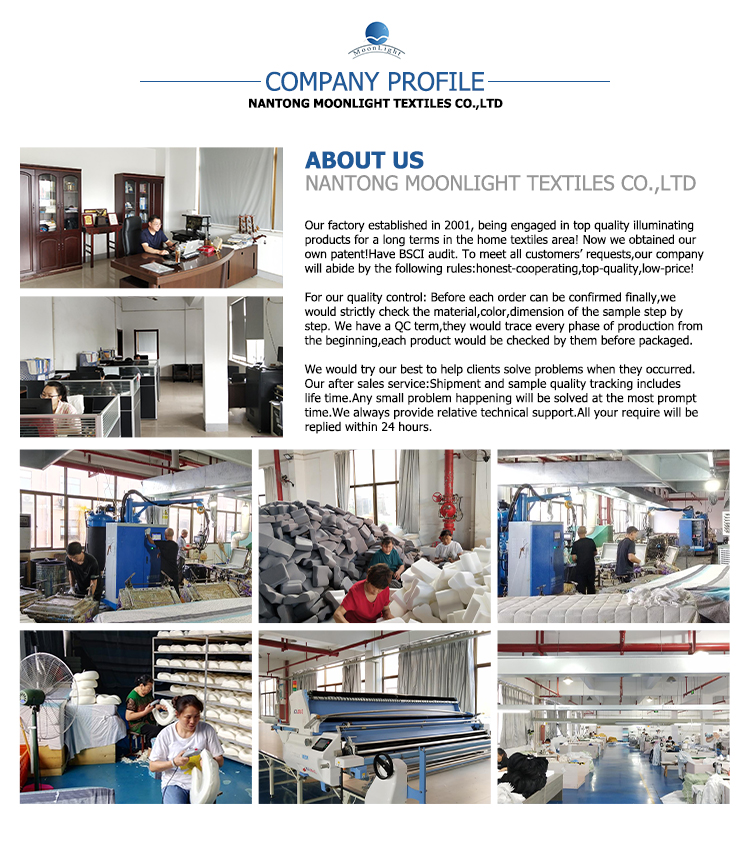
Range building is where this model earns its place. It sits beside seat cushions, wedge lumbar cushions, footrests, travel and neck pillows, dog beds and pregnancy pillows in one programme, which lets an importer fill a container from one supplier instead of three. We have been making home textiles in Jiangsu since 2001 and supply OEM and ODM programmes for private-label brands and distributors, which is why long-standing accounts stay: once a specification is approved, it is repeated rather than renegotiated.
Ordering & Delivery
- Send the specification: model, size (the reference build or your own), face, cover, colour, labelling and packing. We quote against that written brief rather than against a photograph.
- Order quantity for this model starts at 500 pieces, which suits a wholesale back cushion programme rather than single-unit selling. Mixed sizes inside one order change the minimum material quantity and the quotation.
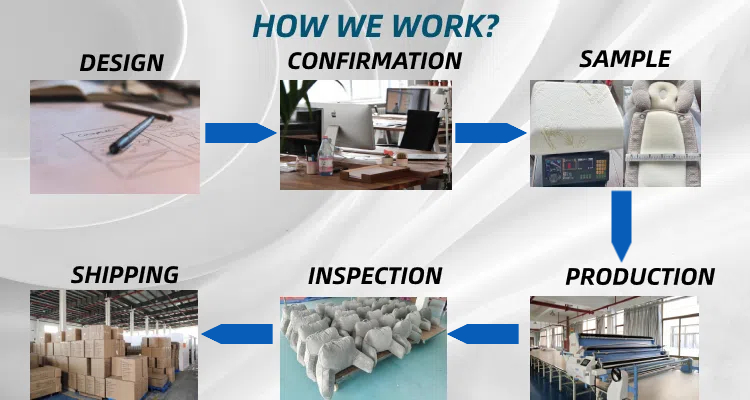
- A pre-production sample goes out for your approval before bulk starts, and the approved sample, its tolerances and the packing artwork are attached to the purchase order so production is checked against a physical reference.
- Stock items ship in about one week, and OEM or ODM runs are scheduled after sample approval — confirm the production window with us once the specification is fixed.
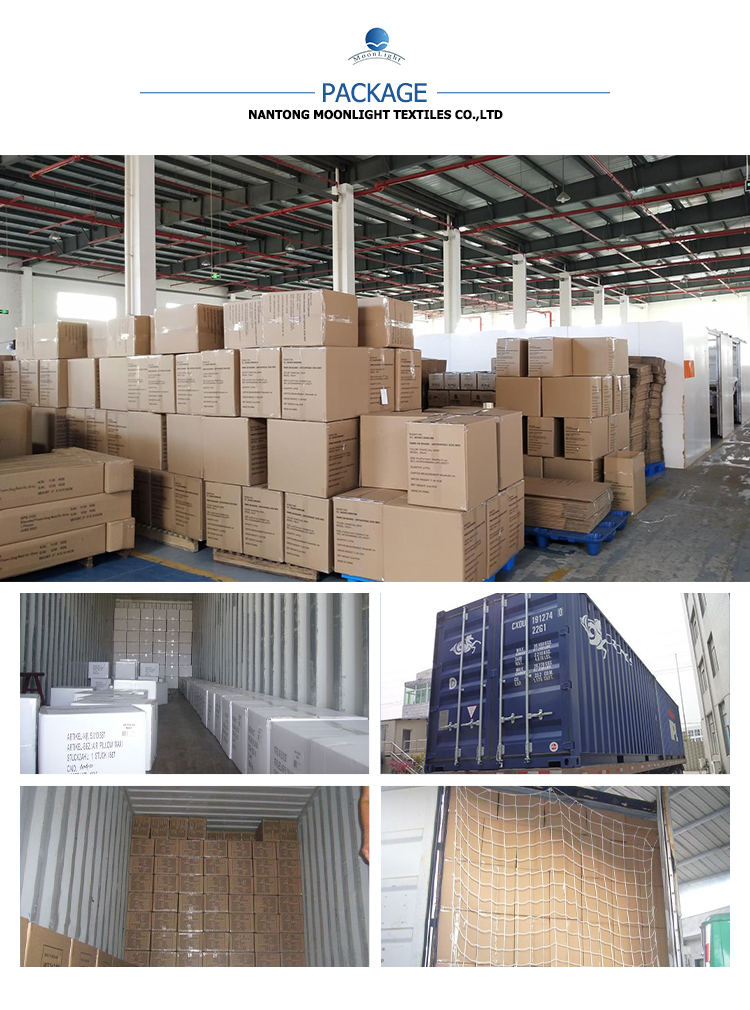
- Standard packing is one piece per polybag inside an export carton, with a colour box or handle bag available, or as you request. Carton quantity, carton dimensions and gross weight are confirmed once the size and packing are fixed, because they drive your freight calculation.
- FOB, CFR, CIF, EXW, FAS, CIP, FCA, CPT, DEQ, DDP, DDU, express delivery, DAF and DES are all accepted, with Shanghai as the port of loading.
- T/T, L/C, D/P D/A, MoneyGram, credit card, PayPal, Western Union, cash and Escrow are all accepted for payment.
- We track quality for samples and shipments through the product's working life and answer every request within 24 hours, so a problem in the field reaches the people who made the cushion.
Quality Control & Inspection
Quality is verified at each stage, not only at the end. Our QC team then follows every batch through production and inspects each piece before packing, with a final inspection before shipment. If your own team or a third-party inspector attends that final check, we plan production around it. Any issue found is raised with you before goods ship, and quality questions are answered within 24 hours. Our factory is BSCI-audited and OEKO-TEX certified.
FAQ
Is this a back cushion or a seat cushion?
It is a back cushion. The name carries both words, which is where the confusion starts, but the placement is behind the lower back — it is not sat on. Depth is the whole point of it: the panel fills the space between the back and the chair rather than carrying weight from below. If you need something to sit on, a seat cushion or a seat-and-back set is the right product; this panel is shaped for the back, not for sitting on.
What should we check on the sample before approving bulk production?
Because every order is a custom memory foam lumbar cushion rather than a stock item, the sample you approve is the only meaningful reference. Start with the foam: how firm it feels in the hand, how quickly it returns after compression, and whether the panel is even across its face. Then the cover — how it sits over the corners, whether the seam line runs straight, whether the stripe is agreed, and how the colour reads in daylight rather than under office lighting. Smell the cushion shortly after unpacking; fresh foam should settle, and if it does not, say so before production. Finally, put the sample on the chair type you are selling into and sit against it, because fit is the one thing a specification sheet cannot tell you.
Will the cushion return to shape after compressed shipping?
It will if the compression method suits the foam. Standard packing is one piece per polybag inside a carton, which needs no recovery at all. If you want vacuum or compression packing to cut freight volume, test it on the sample first: check recovery time out of the bag, whether the panel comes back flat, whether the cover still fits, and whether any odour clears. A memory foam back cushion that has been over-compressed for too long can hold a crease, so agree compression on a tested sample rather than discovering it in your warehouse.
How do we keep the stripe and colour consistent across repeat orders?
Through the swatch, not the photograph. Approve a fabric swatch and a sealed production sample at the start, and treat those as the reference for every repeat of the striped lumbar support back cushion. Colour shifts most when a mill re-dyes a yarn lot, so tell us at the start if a long programme is planned and we will plan the fabric around the total quantity rather than around a single run.
Is the massage feature a mechanism?
No. This is a foam and fabric product — there is no motor, no battery and no moving part. The massage reference describes the textured face option, the dot pattern listed in the specification, which gives a raised surface against the back. If your listing needs a textured face, specify it at sampling; if it needs a smooth one, say so and the order is written that way.