
The buyer negotiates the unit price, but incurs additional costs at the packaging stage. This is an analysis from the factory's perspective on how compression, carton design, and container planning quietly determine whether the pillow products are profitable.
In most of our procurement negotiations, we always start with two figures: the unit price and the MOQ. Very few people would discuss packaging issues first. However, in this category where the product is mainly transported by air, packaging determines an astonishingly high landed cost. A pillow with a production cost of $5, if packaged improperly, the transportation cost could increase by another $1 - and this dollar directly comes from the retail profit.
For over two decades, we have delivered maternity pillows, memory foam pillows, and dog beds to twenty different countries, and we know that packaging planning should be given the same level of attention as the technical plan. Here is our way of thinking.
Compression Is Not One Method
"Vacuum packed" is not a specification. Different fills behave differently under pressure, and the wrong choice damages the product before it reaches the shelf.
Polyester fibre fill and PP cotton compress well and recover quickly. A U-shaped maternity pillow can typically be reduced to roughly a third of its loose volume and will return to full loft within twenty-four to forty-eight hours of opening.
Shredded memory foam also compresses generously, but recovery is slower and temperature-dependent. A shipment that sits in a container for five weeks will look flat on arrival and generate customer complaints that are really logistics complaints. If your market is northern Europe in winter, we recommend a lighter compression ratio and an insert card explaining the recovery window.
Moulded memory foam like cervical pillows, orthopaedic dog bed bases, should be compressed lightly or not at all. Over-compressing a moulded core creates permanent creasing. We would rather ship fewer units per carton than replace a container of deformed product.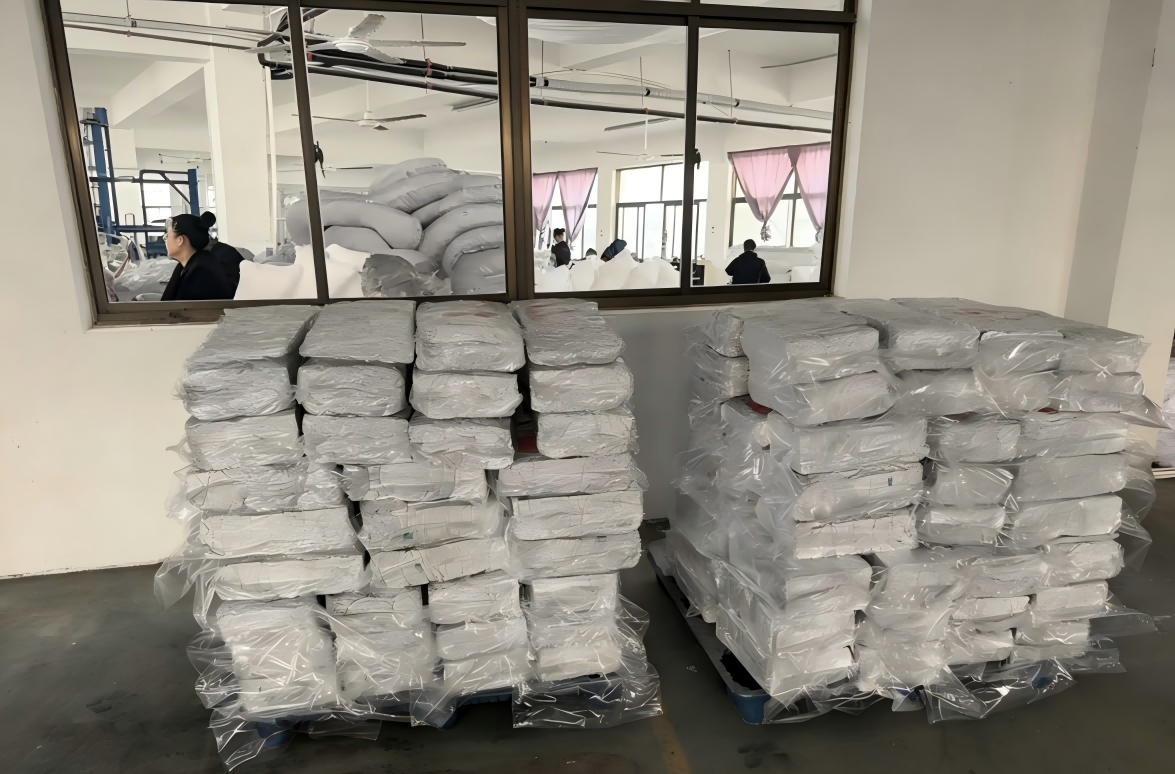
The Carton Is a Cost Centre, Not an Afterthought
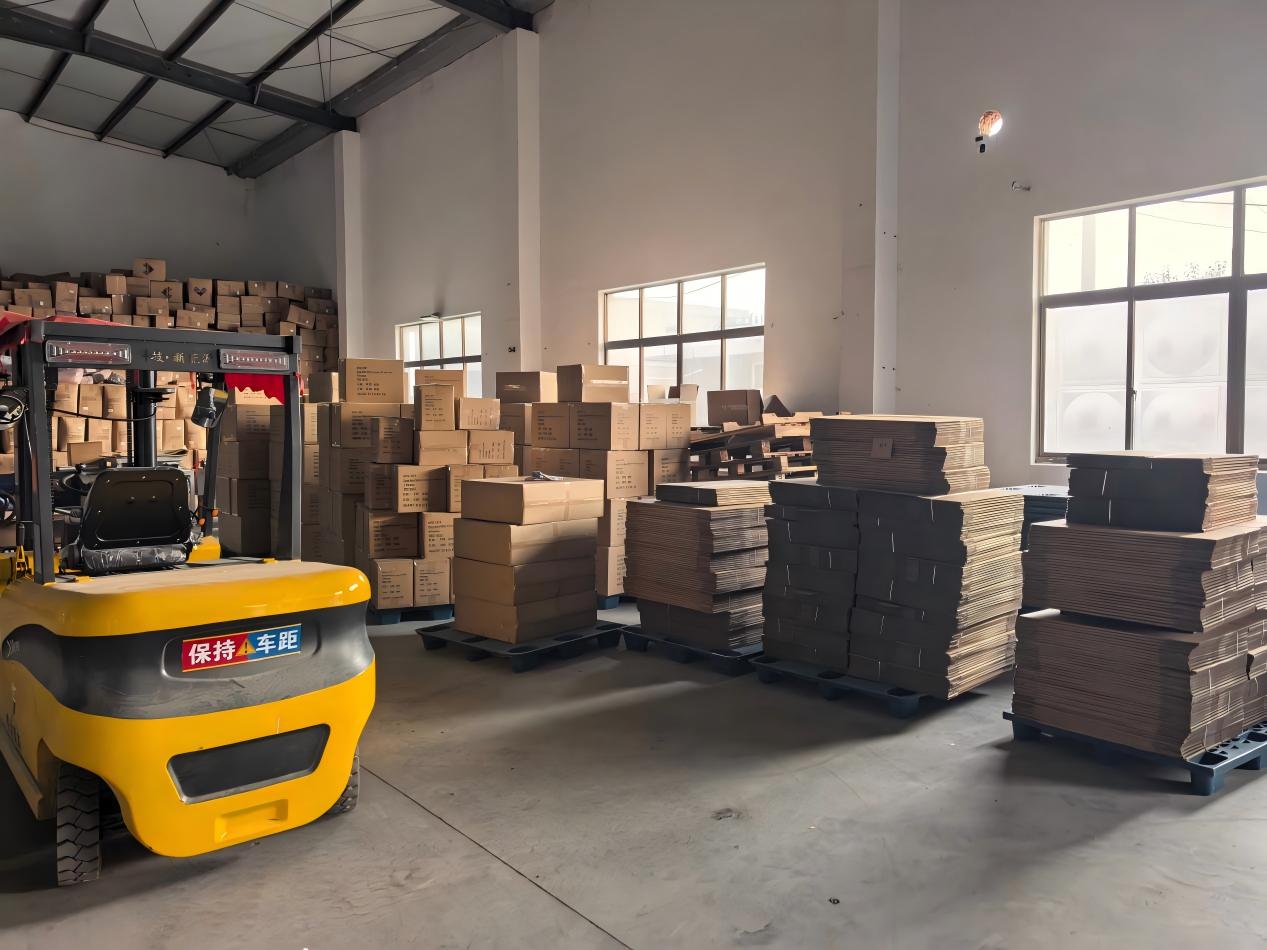
Once compression is settled, carton geometry decides how many units cross the ocean in one container. Two carton designs holding identical quantities can differ by ten to fifteen percent in container utilisation simply because one leaves dead space at the top of the stack.
Three practical points buyers often miss:
- Carton strength must match the stack height, not the product weight. Pillows are light, but a five-high stack of compressed cartons in a humid container puts real load on the bottom row. Under-specified board collapses, and collapsed cartons are rejected at the receiving warehouse.
- Retail-ready packaging changes the maths. A printed colour box for shelf display is bulkier and more fragile than a poly bag inside a master carton. If your programme is Amazon FBA, the requirements shift again — barcode placement, poly bag suffocation warnings and unit-level labelling all have to be built into the plan at artwork stage.
- Moisture control is cheap insurance. Desiccant sachets and a moisture-barrier liner add a small amount per carton and prevent the mildew claims that occasionally follow a slow summer sailing.
Artwork and Compliance Belong in the Packing Plan
Packaging is also where regulatory exposure lives. Permanent care labels, fibre content declarations, batch codes, importer details and warning text are printed items, and printed items have lead times. For goods entering the EU, the responsible economic operator required under GPSR must appear on the artwork before printing begins, not after the cartons are made.
We ask buyers to approve packaging artwork in parallel with sample revision. These two workstreams do not depend on each other, and running them in sequence adds one to two weeks to the schedule for no benefit.
What We Ask Buyers to Send
To build a packing plan that holds up, we need four things: the destination market, the sales channel, the preferred carton or the freedom to propose one, and the acceptable recovery window for compressed goods. With those four inputs we return a carton specification, a pallet and container loading plan, and a piece count per 20GP and 40HQ — before the first bulk unit is sewn.
Talk to Our Factory
Nantong Moonlight Textiles Co., Ltd. has operated a 5,000 m²+ facility in Chongchuan District, Nantong, Jiangsu since 2001, holding OEKO-TEX Standard 100 and BSCI approvals and exporting to more than twenty countries. OEM MOQ starts at 500 pieces per design, negotiable for trial orders.
Send us your product reference and destination market, and we will return a compression recommendation, a carton plan and a factory-direct quotation.
📧 Email: anna@ntmoonlight.com
📞 Phone / WhatsApp: +86 0513-85602180
👤 Contact: Anna (Sales Manager)
📍 Address: No.56 Tonggang Road, Chongchuan District, Nantong City, Jiangsu Province, China


