
Once goods leave the factory, brands gather months of real-world insight that the production floor rarely sees. This is what that feedback lets us refine and why the second run should be a revision rather than a repeat.
Every pillow programme generates customer feedback after launch. Brands read it closely. Because it tells them what the market actually wants. Factories, in most cases, never see it.
The relationship usually runs one way. A buyer sends a specification, we produce against it, the goods ship, and the conversation pauses until the reorder at which point the buyer typically confirms the same specification unchanged. A year of accumulated market insight sits unused, and the second run reproduces the first one exactly. That is an opportunity left on the table. Most of what customers comment on in soft goods directly to adjustable manufacturing variables, and adjustable variables can be tuned between runs.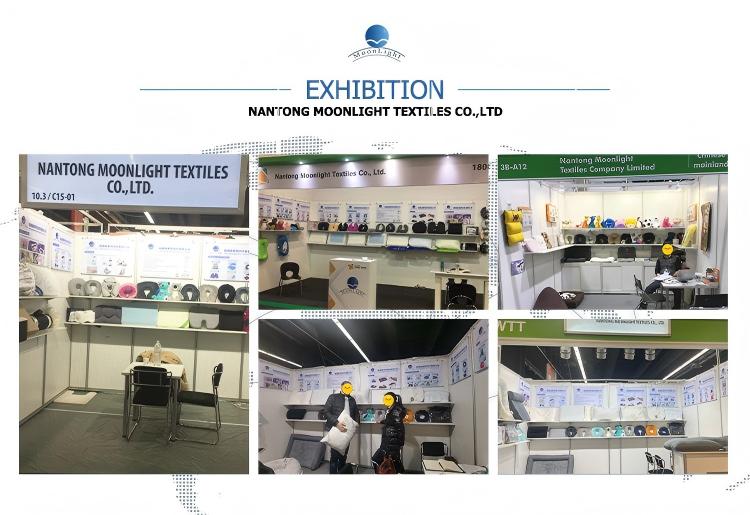
Four Feedback Themes We Can Act On
Comfort that softens over time. The most frequent theme in maternity and sleeping pillows, and almost always a fill specification choice rather than a workmanship matter. Standard polyester fibre gradually compacts under nightly use. Moving to siliconised hollow-conjugate fibre, or increasing fill weight against the same cover volume, changes the long-term feel. Both add unit cost, which is exactly the trade-off worth modelling once you know how much the market values durability.
Firmness preference. This is calibration, and it is adjustable to the gram. If feedback splits evenly between wanting firmer and wanting softer, the range may be better served by two firmness variants than by one middle setting. If it leans consistently one way, we adjust the fill weight on the next run against the same sealed sample.
Perceived size versus the listing. Frequently a presentation question rather than a production one. Pillows are measured relaxed after recovery from compression, while listing photography is styled on made-up beds. Aligning the imagery, the size chart, and a packaging insert usually resolves it and it is worth resolving early, since size expectations shape review sentiment out of proportion to their real impact.
Care and washing outcomes. Cover behaviour after laundering and fill distribution over time both respond to design decisions: a wash-test result reflected on the printed care label, or an inner liner reworked to keep fill evenly chambered. These are inexpensive to change between runs and easy to carry forward once identified.
Which Feedback Reaches the Production Floor
Not every comment maps to a manufacturing lever, and buyers sometimes forward an entire review export expecting a specification answer.
Final-mile carrier handling, fulfilment picking inside a marketplace warehouse, and change-of-mind decisions with no product reason attached all sit outside the factory's scope. So does isolated personal preference: one reviewer wanting a firmer pillow is noise, forty reviewers converging on the same point is a specification signal. Drawing that line protects the value of the exercise. Filtered, product-related feedback gets a concrete engineering response. An unfiltered export buries the signal.
How to Share It So It Is Actionable
Three things make market feedback usable on a production floor.
- Quantify it. "Some customers mention thickness" is not a brief. "Thickness is referenced in twelve percent of post-purchase feedback, concentrated in units sold after March" is. A rate with a denominator lets us judge whether a specification change earns its cost.
- Attach visual reference. Photographs of a used unit, ideally alongside the sealed sample, communicate more in a second than a paragraph of description.
- Include batch information. Order number and production date let us establish whether a pattern spans the programme or sits within one run. A single-run pattern usually traces to a specific fibre lot or fabric roll — a very different conversation from evolving the product design.
Build the Loop into the Programme
The brands that improve fastest treat the reorder as a revision cycle. A short review before each run — leading feedback themes, any recurring service enquiries, how the range performed against its firmness targets — takes one call and typically yields two or three concrete specification refinements. It also raises what a sample can be. A revised sample informed by twelve months of real market response is a stronger starting point than any original reference product, because it carries information no tech pack could contain.

Talk to Our Factory
Nantong Moonlight Textiles Co., Ltd. has manufactured home textiles in Nantong, Jiangsu since 2001 — over twenty years of OEM and ODM production across pregnancy pillows, memory foam and travel pillows, dog beds, cushions and mattresses, sold into the Middle East, South America, Europe and Southeast Asia. We work to a principle of "Sincere, High quality," and that includes reviewing how a range performs after it ships, not only before.
Share your post-launch feedback themes with rates and photographs, and we will come back with specification options, a revised sample plan, and the cost difference for each route.
📧 Email: anna@ntmoonlight.com
📞 Phone: +86 0513-85602180
👤 Contact: Anna (Sales Manager)
📍 Address: No. 56 Tonggang Road, Chongchuan District, Nantong City, Jiangsu Province, China


