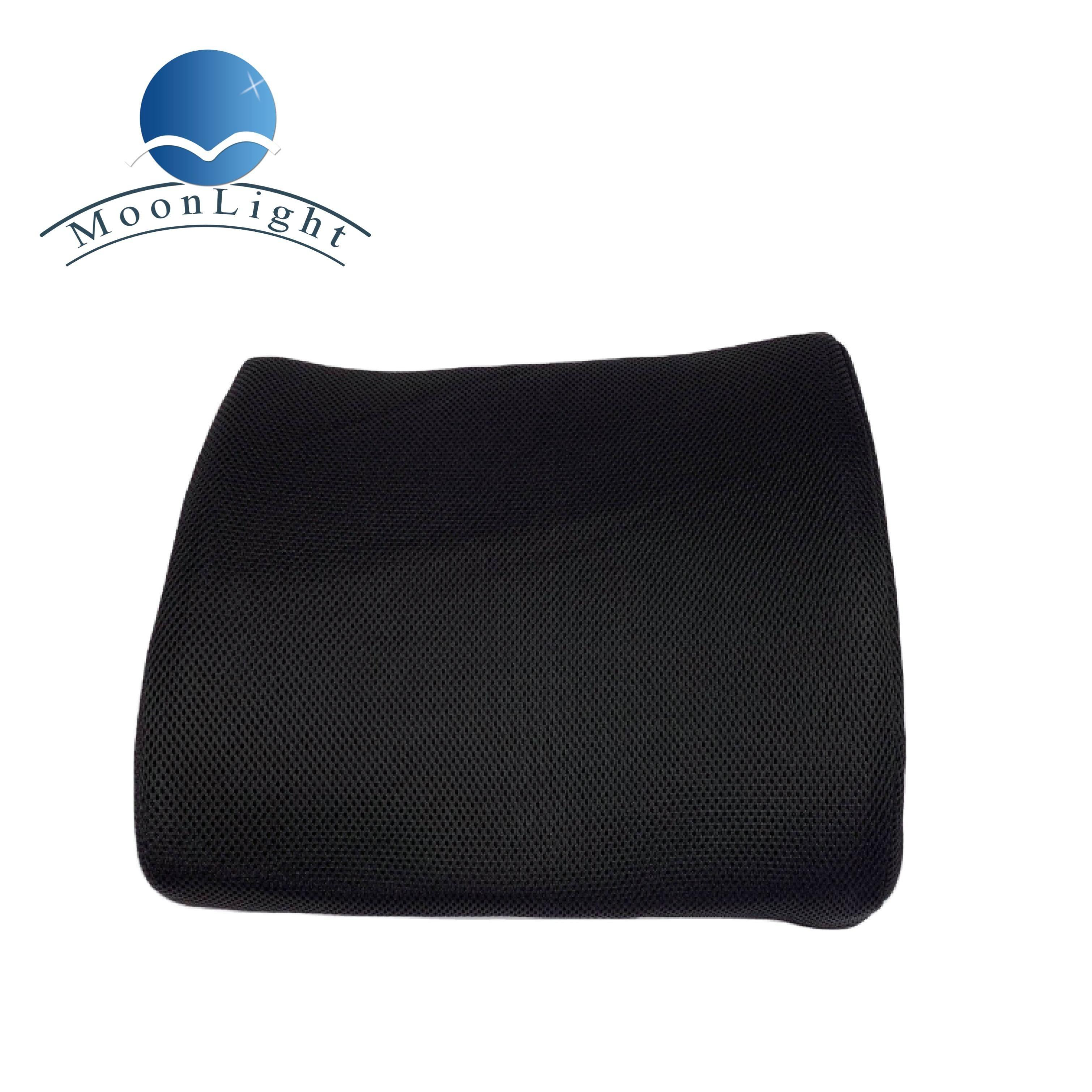
Wedge Shape & Support
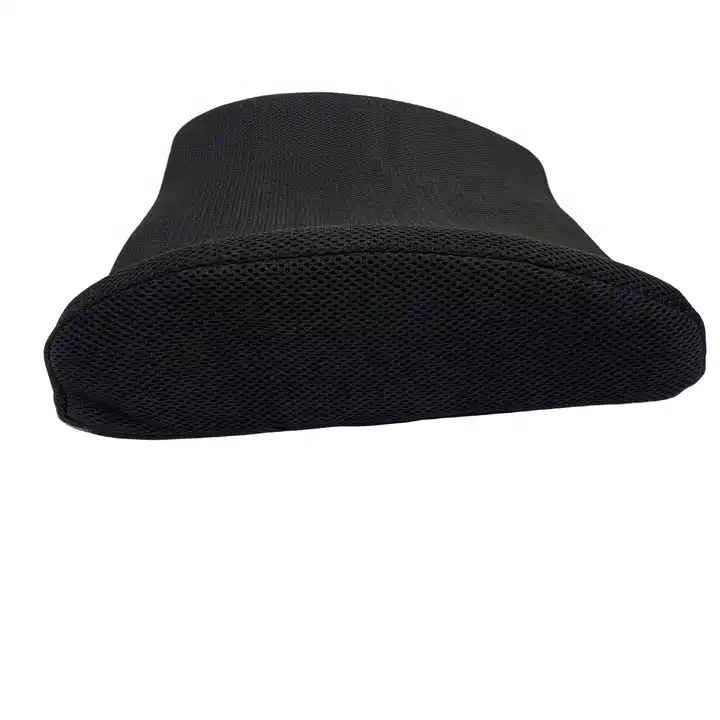
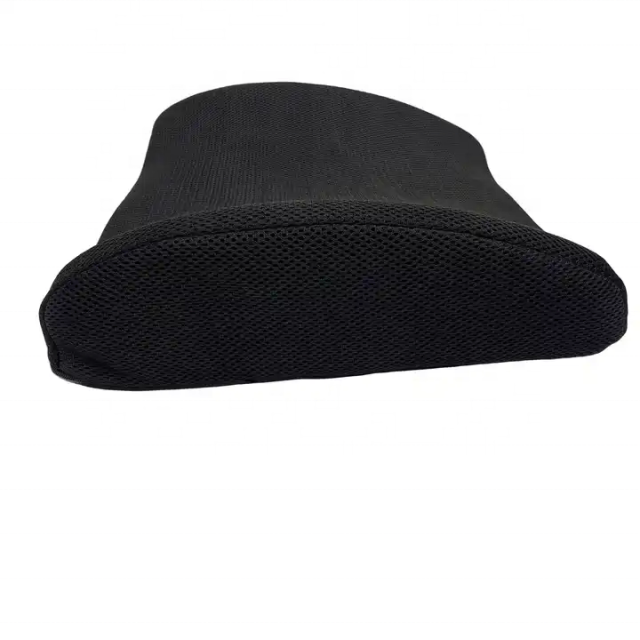
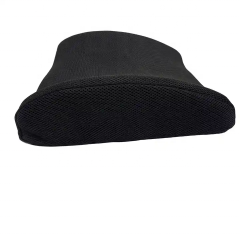
- The angle closes the gap — A flat pad adds bulk but leaves the hollow between the lumbar curve and the backrest untouched, so the sitter's own muscles keep the trunk upright. The wedge tapers from a deep base to a slimmer top and fills that hollow, which is a difference a person feels at the end of a shift rather than in the first five minutes.
- Contact spread, not a pressure point — The curved face follows the lumbar area instead of pressing on one spot. A lumbar support cushion earns its price by sharing load across the whole contact zone rather than concentrating it where a chair's hard edge would sit.
- Tapered upper edge keeps the shoulders free — The cushion is deepest at the bottom and thinnest at the top, so the upper back still reaches the backrest; the user is supported at the waist without being pushed forward out of the chair.
- Memory foam holds the profile — The core takes the shape of the body under load and returns slowly as the load comes off. Fibre filling starts firm and packs down within weeks, which is how a flat pad loses the very support it was bought for.
- Stable through posture changes — The cushion sits on the seat under its own weight and leans on the backrest, so it stays where it was placed when the sitter moves between typing forward, sitting square and leaning back.
- Passive support only — Memory and massage appear in the feature list, but this model has no motor, no vibration unit, no heating element and no control. Massage describes the surface treatment, and the dotted pattern on the cover is a texture rather than a mechanism.
Product Overview
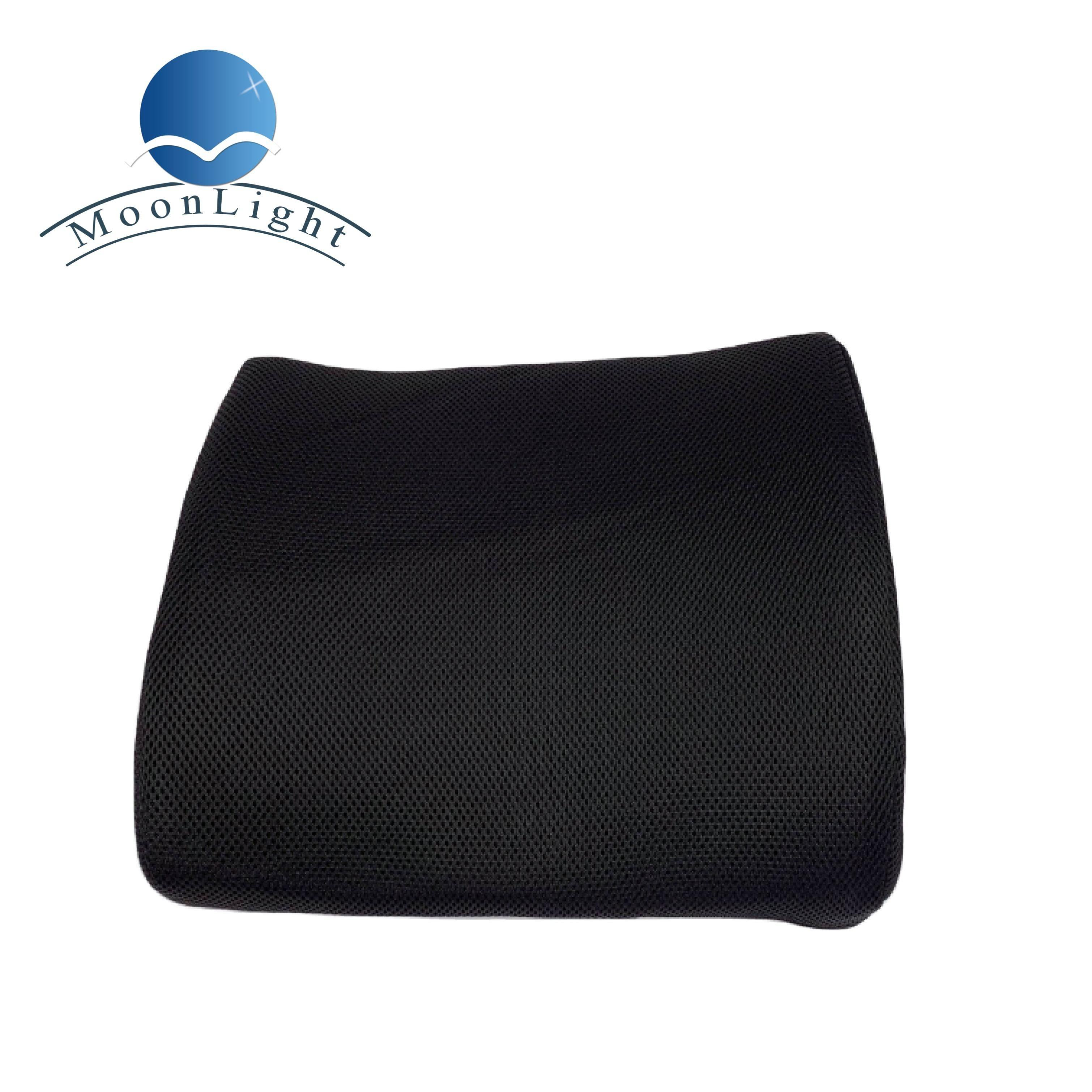
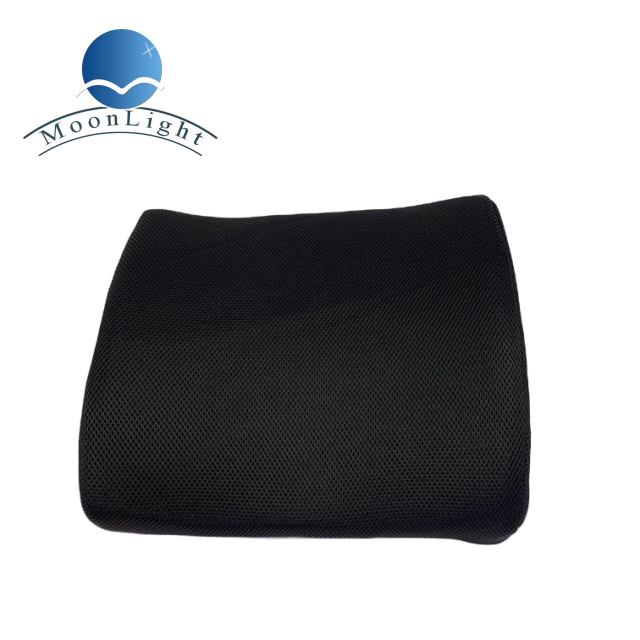
Moonlight MLMC040 is a wedge-shaped memory foam back cushion: a shaped layer of support that sits between the lower back and the backrest of a chair or vehicle seat. Buyers often order it as a memory foam wedge seat cushion, and in use that is exactly the job it does — it rests on the seat and leans against the backrest, so the shaped face lands in the small of the back where most chairs leave a hollow. It is a back and waist support, not a pad to be sat on.
We build it for people who stay seated through a working day: office and home-office staff at fixed or height-adjustable desks, and anyone whose chair is comfortable everywhere except the lower back. It takes the place of the folded jumper and the flat pad that only pretend to fill that gap, and it keeps its shape through the day instead of flattening after the first hour.
There is nothing to set up. Place it on the seat with the thicker edge down, lean back until the curve meets the small of your back, and it stays there through typing, calls and the reach across the desk. Nothing to plug in and nothing to programme: the support comes from the shape and the foam, and the cushion travels from the desk chair to the car seat when you do, doubling as a car driver waist and back support pillow.
Materials & Cover Construction
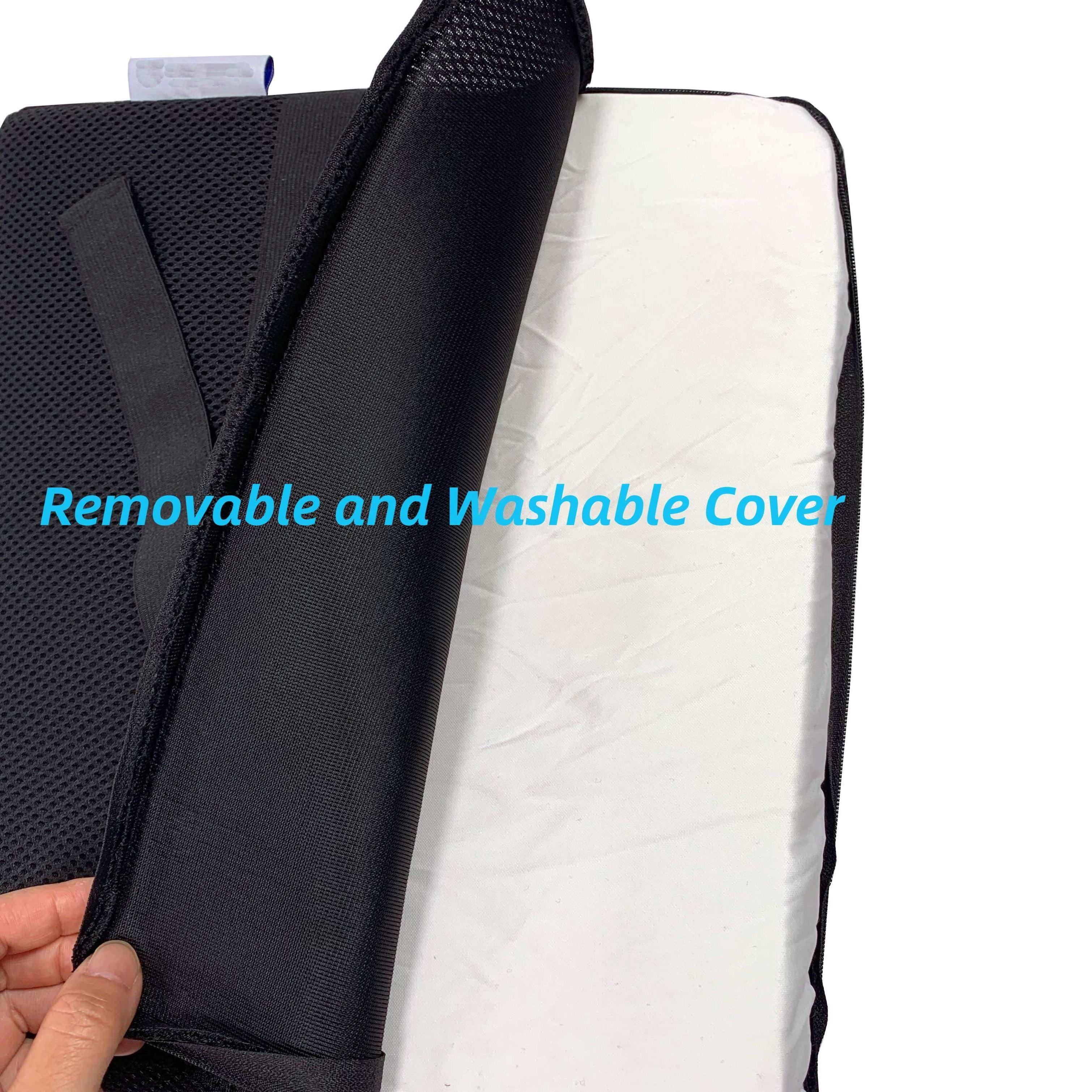
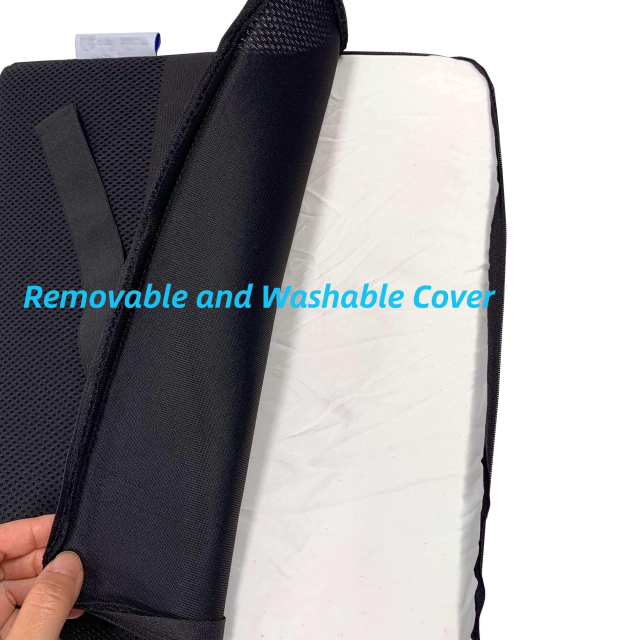
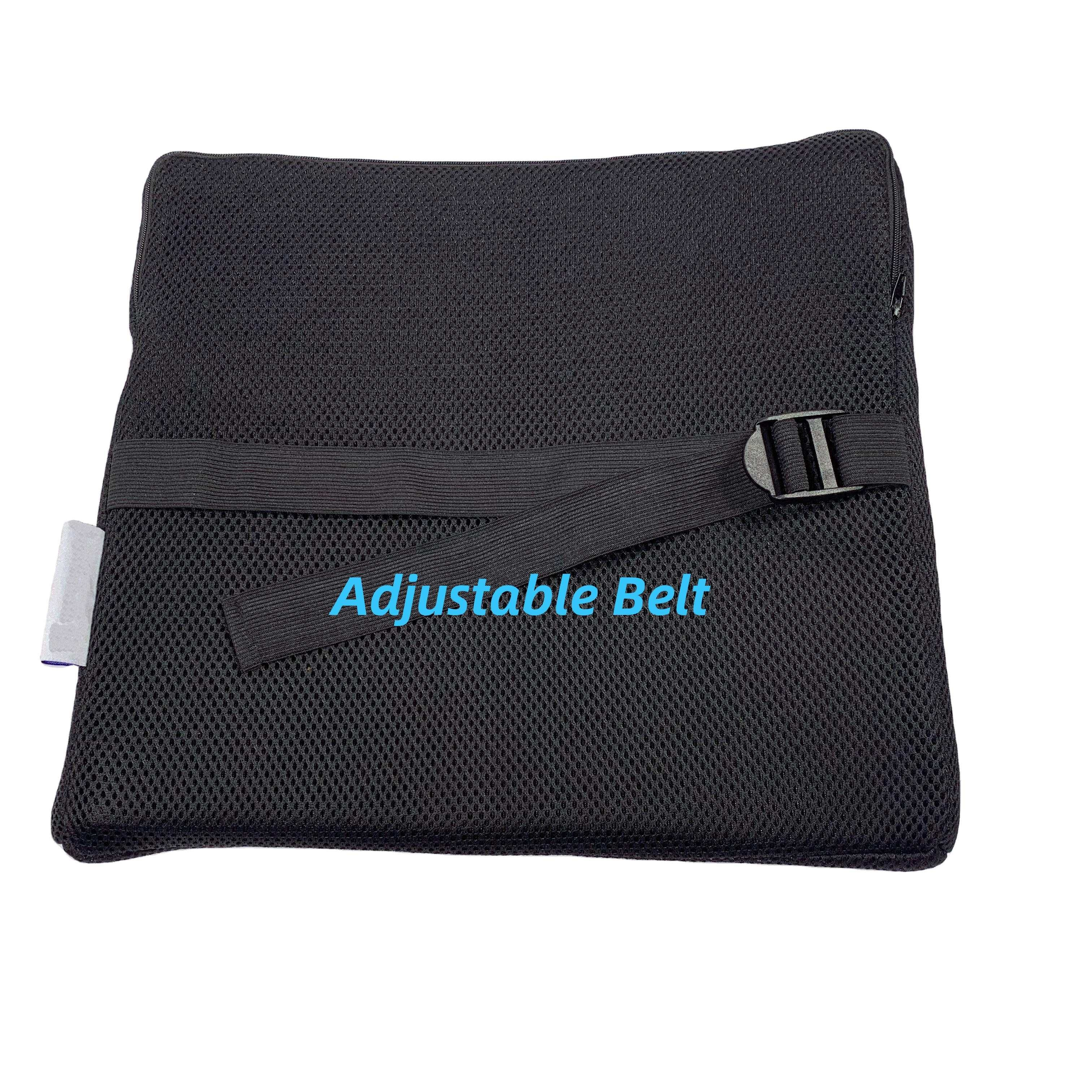
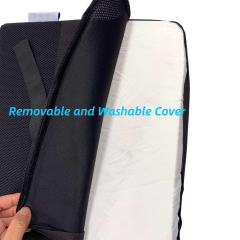
The standard cover is sandwich fabric in 100% polyester — a three-layer knit with two outer faces joined by a connecting layer, which is where the mesh texture and the airflow come from. The mesh face sits against the back and keeps air moving between fabric and skin through a long seated shift, which is the practical difference on a warm afternoon or in a heated cab. The detail specification also lists short plush, so the same memory foam back cushion can be supplied with a softer, warmer face for winter ranges and gift-led programmes, or in a fabric you specify. The cover closes with a zip across the back, so it lifts off for cleaning and goes back on without disturbing the foam. In the photos the cover is a black mesh with the white core visible where the fabric is peeled back — a useful image for a listing, because it shows buyers what is under the cover instead of asking them to take it on trust. Edges are rounded and the seam line runs cleanly around the profile, which matters when the cushion is merchandised on a shelf as well as handled remotely. Fabric choices carry the claims that go on your listing, so settle them at sampling: fibre content, fabric weight, colourfastness, abrasion performance, seam and zip specification, and whether the cover is removable on the version you approve.
Fit Check Before Ordering
- Sit in the chair you intend to use and notice where the backrest leaves a gap behind the lower back — that gap is what the wedge exists to fill.
- Measure the backrest height and the seat depth. The reference 33 × 35 × 9.5 cm footprint should reach from around seat level to the small of the back without pushing the shoulders forward.
- Judge the seat, not only the back. Unlike a memory foam wedge seat cushion that is sat on, this car driver waist and back support pillow leans against the backrest, so its thickness sits behind the hips; on a shallow seat, confirm the sitter still gets thigh support.
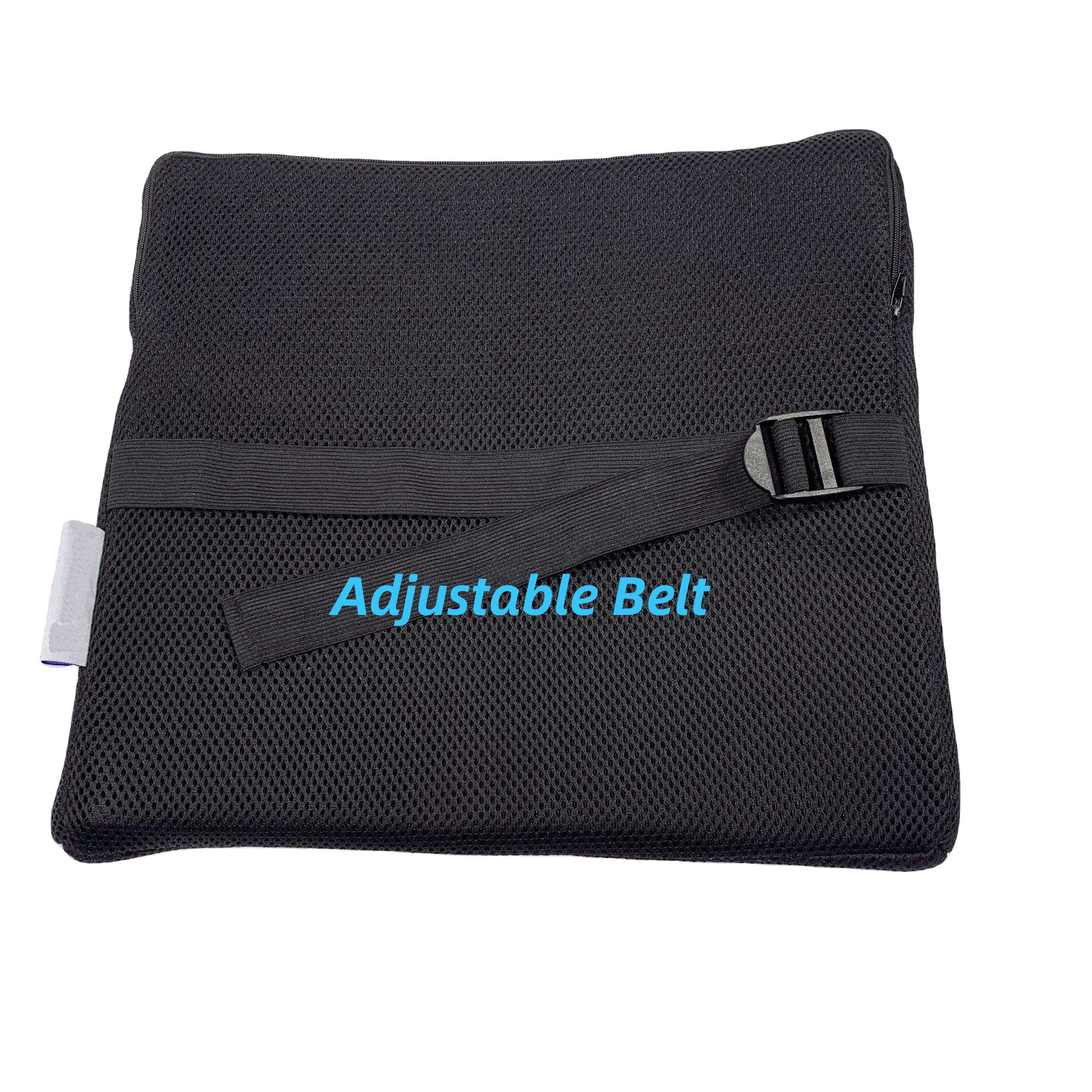
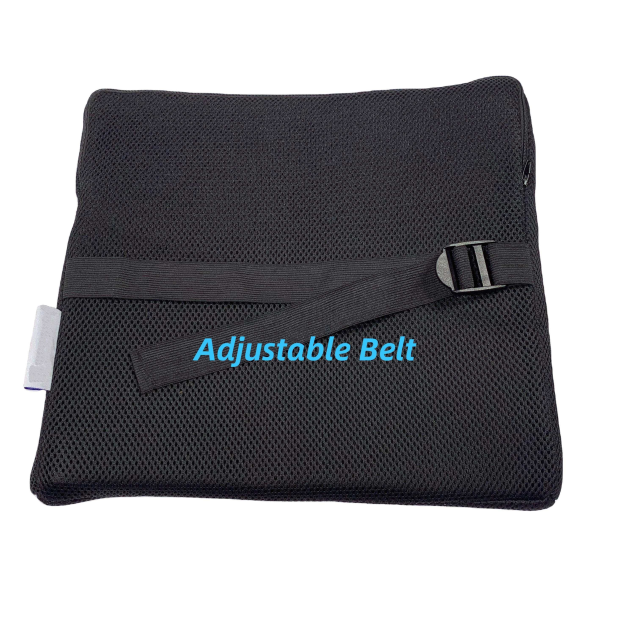
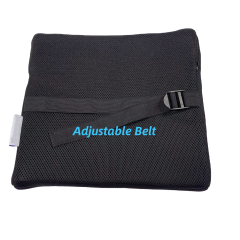
- Check the back of the chair for somewhere to route a strap. The cushion carries an adjustable belt with a buckle across the back, and mesh backs, integrated headrests and moulded shells do not all leave room for one.
- Rule out the seats it is not meant for: chairs with an aggressive built-in lumbar bulge, deeply scooped bucket seats, backrests shorter than the cushion, and reclined sofas where the sitter lies back rather than sits up.
- If the chair, the seat or the standard shipping carton is unusual, send the dimensions before ordering. As a wedge pillow manufacturer we can say whether the reference footprint suits the seat or whether a custom size is the better route.
- Approve a physical sample before bulk production and write the measurement points, foam dimensions, cover dimensions, finished tolerances and approved version into the purchase order.
Where It's Used
- Office desks and sit-stand workstations — On a task chair the wedge goes on the seat with the thick edge at the back and stays put through the hours when posture quietly collapses: the last stretch of a shift, an afternoon of calls, or the point in the day when a height-adjustable desk has been raised and the backrest no longer meets the lumbar area.
- Home offices and reading chairs — A dining chair pressed into desk duty has a flat back and no lumbar shaping at all. A lumbar support cushion of this size turns it into a seat a person can stay in for a two-hour stretch without shifting every ten minutes.
- Cars, taxis, vans and fleet vehicles — Behind the wheel it works as a car driver waist and back support pillow: it sits behind the lower back against the seat back, and because it is portable, the same cushion can move between drivers and vehicles in a pool fleet.
- Shared desks and hot-desking floors — The cushion belongs to the person rather than the desk, so it travels to whichever chair is free that day, which is the practical answer for offices where nobody keeps the same seat twice.
- Meeting, training and waiting rooms — Chairs chosen for stacking rather than support are exactly where a portable back support earns its place, and it goes in with the laptop.
- Dining chairs and kitchen tables at home — The same wedge works at the family table or a homework desk, light enough to move between rooms and needing no fixing to the chair.
Specifications
| Item | Memory foam back cushion, model MLMC040 (wedge lumbar support) |
|---|
| Place of origin | China |
| Brand name | Moonlight |
| Material | short plush,sandwich,as customized |
| Cover material | Sandwich fabric, 100% polyester |
| Filling | Memory foam |
| Feature | Memory, Massage |
| Style / pattern type | Plain / DOT |
| Season / grade | All-season / quality |
| is_customized | Yes |
| Size | customized |
| Weight | 0.5-1 Kg |
| Part | Back |
Customisation & Private Label
Custom versions of this back cushion are made in our own workshop in Nantong, Jiangsu, where we have produced home textiles since 2001 and supply both stock items and OEM/ODM programmes to brands, importers and marketplace sellers. As a wedge pillow manufacturer we quote against one complete specification, so the price you compare is the price for the size, cover, colour and packing you actually want, not for a headline version of it.
What can change: size, starting from the reference footprint and re-cut for a specific chair, carton or planogram; colour; cover fabric; labels; logo application; instruction sheets; package artwork; colour boxes; handle bags and export carton marks. What a change moves: cost, minimum quantity, production time, unit weight, appearance and care requirements. A printed carton and a special colour are not the same order as a stock black cushion, so describe the whole programme before we quote.
Every option you choose goes into an approved bill of materials and onto the signed sample, which is what production is checked against. That matters most for details that are easy to describe and hard to control: the exact mesh colour, the shade of the seam thread, the position of a label, and the wording printed on the care card.
The cushion also fits a wider programme. One cover family and colour direction can run across our seat cushions, back cushions, footrests, travel pillows, memory foam pillows, pregnancy pillows, dog beds and household textiles, so a shelf or a catalogue reads as one family rather than a set of unrelated buys. That is the practical reason buyers stay with us across seasons: the same specification, the same materials, and a contact who knows which version you approved.
Care & Cleaning
- Unzip the cover along the back seam and lift the memory foam core out.
- Shake dust and crumbs out of the cover and spot-clean light marks before committing to a full wash.
- Wash the cover to the instructions you approve. Fix the wash temperature, cycle and drying method with us at sampling — a sandwich mesh face and a short plush face do not tolerate the same treatment, and we do not publish a single wash-cycle count that would apply to both.
- Air-dry the cover and do not refit it until it is completely dry; a damp cover against foam is how a cushion starts to smell.
- Treat the core as spot-clean only. Wipe surface marks with a damp cloth and let the foam air in a shaded, ventilated place, away from direct sun and away from a tumble dryer, which changes how the foam behaves.
- Refit the cover with the foam seated squarely into the corners, close the zip, and check the belt and buckle before the cushion goes back on the chair.
- Print the approved method on the care label and record it in the bill of materials; if your market expects a wash-cycle claim, agree the test protocol with us before the label goes to print.
Ordering & Delivery
| Minimum order | 500 pcs for this model; a custom fabric, special colour or printed package is quoted on its own terms |
| Lead time | Stock items: about one week; OEM/ODM available |
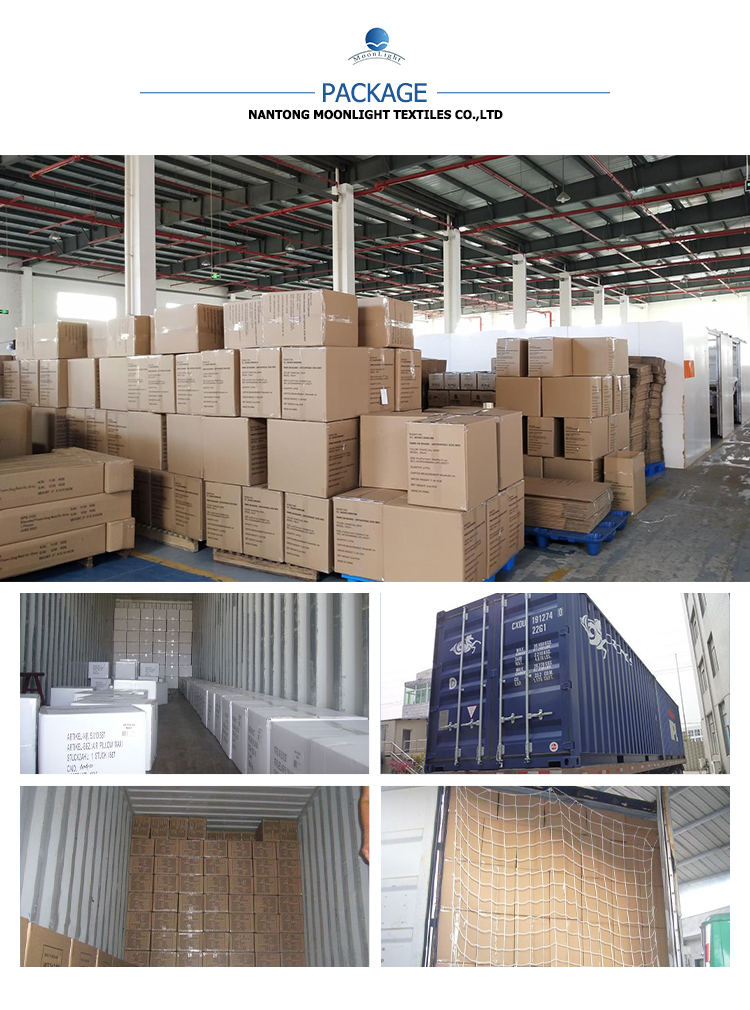
| Packing | Polybag + carton; 1pc/polybag, colour box or handle bag, or as requested |
| Carton data | Carton quantity, dimensions and gross weight are confirmed once the final size and weight are approved |
| Port of loading | Shanghai |
| Delivery terms | FOB, CFR, CIF, EXW, FAS, CIP, FCA, CPT, DEQ, DDP, DDU, Express Delivery, DAF, DES |
| Payment | T/T, L/C, D/P D/A, MoneyGram, Credit Card, PayPal, Western Union, Cash, Escrow |
| Payment currencies | USD, EUR, JPY, CAD, AUD, HKD, GBP, CNY, CHF |
| Main export markets | Western Europe, North America and South America about 20% each; Northern Europe 15%; Eastern Europe 10%; Southern Europe 8%; East Asia, Southeast Asia and the domestic market the remainder |
| Quality tracking | Shipment and sample quality tracking provided throughout the product lifetime; all requests answered within 24 hours |
| Working languages | English, Chinese, Spanish, Japanese, Portuguese, German, Arabic, French, Russian, Korean, Hindi, Italian |
Quality Control & Inspection
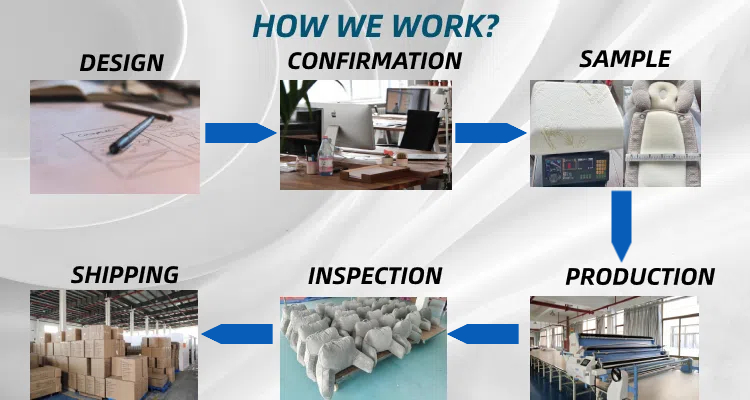
Quality is verified at each stage, not only at the end. Before bulk production we submit a pre-production sample for your approval, checking material, colour and dimensions step by step. Our QC team then follows every batch through production and inspects each piece before packing, with a final inspection before shipment. If your own team or a third-party inspector attends that final check, we plan production around it. Any issue found is raised with you before goods ship, and quality questions are answered within 24 hours. Our factory is BSCI-audited and OEKO-TEX certified.
FAQ
Is this a seat cushion or a back cushion?
It is a back and waist support. On a chair the wedge rests on the seat and leans against the backrest, so the shaped face sits behind the lower back rather than under the hips. It is bought under the memory foam wedge seat cushion description, but it is not made to be sat on, and it is not a bed wedge or a sleep pillow.
Will it fit my office chair or my car seat?
Fit is decided by the backrest rather than the seat alone: the backrest has to be tall enough to lean against, and the seat deep enough that the cushion's thickness sits behind the hips without taking away thigh support. It suits task chairs, home-office chairs, dining chairs and normal car, taxi and van seats. In a vehicle it sits against the seat back with the thick edge at the base, and it is not the right shape for deeply scooped bucket seats or chairs with an aggressive built-in lumbar bulge. A lumbar support cushion of this height also depends on the seat back leaving room to route the belt.
Does the massage feature mean the cushion vibrates?
No. This model is passive support: there is no motor, vibration unit, heating element or control, and nothing on it needs charging or plugging in. Massage describes the surface treatment, and the dotted cover pattern is a texture rather than a mechanism.
Can the cover be removed for cleaning?
Yes — the cover zips off the foam core, which is what makes the cushion workable in shared settings: a fleet, a hot-desking floor or a clinic can clean covers between users instead of replacing cushions. Wash temperature, cycle and drying method are agreed at sampling for the cover you order and printed on the care label.
Can you make it in our own size, colour and cover?
Yes. Size and colour are customized on this model, and the cover can be sandwich mesh, short plush or a fabric you specify, with labels, logo application and packing artwork to match. As a wedge pillow manufacturer we approve every change on a physical sample first, so the dimensions and colour you sign off are the ones that go into production.
How firm is the foam, and will it flatten?
The core of this memory foam back cushion takes the shape of the body under load and returns slowly when the load comes off. Firmness and rebound are most reliably assessed in the hand and against a chair, so ask for a foam sample of the grade you are considering instead of relying on a written description; a sample also lets you check cover fit, seam quality and any odour after unpacking.
The specification shows two different weights. Which one is right?
Our key attributes state 1.5–2 kg and the detailed specification states 0.5–1 kg, so treat both as indicative until the approved sample is weighed. Weight drives parcel cost, carton gross weight and freight quotations, so record the accepted unit-weight range in the commercial specification before packing and bulk production are approved.